
How sensor size shapes your photos
Your photos hinge on sensor size. Bigger sensors catch more light, delivering cleaner images, better shadow detail, and less noise at higher ISOs. You’ll see smoother skies and skin tones, especially in low light. Smaller sensors can be sharp in bright scenes but may show more grain and less depth of field. Think of it like painting: a larger canvas lets you capture finer texture without losing spots you want to keep.
With a bigger sensor, you gain dynamic range to preserve highlights and recover dark details. Your photos feel more alive, with color and contrast that invite you in. For portraits, a larger sensor helps blur the background just enough to make your subject pop naturally. In action shots, you trade some speed and lens size for real image quality gains.
Choose a sensor size that fits your style and budget. Night scenes or studio portraits often benefit from a bigger sensor, while travelers and fast shooters can still achieve great results with the right lenses and technique. Your choice shapes framing, post-processing potential, and overall look.
Sensor size image quality basics
Sensor size sets how much light your camera can collect. More light means cleaner images with less noise, especially in shadows and low light. Bigger sensors also produce a shallower depth of field, helping your subject stand out and offering the soft background look you may want.
Images from larger sensors often display better color accuracy and tonal range, with smoother transitions and improved performance when you push exposure in post. The sensor is the backbone of image quality, though processing power and lens quality matter too.
You don’t always need a huge sensor to win. A capable smaller sensor with sharp lenses and solid technique can rival a larger sensor in many scenes. It’s about balancing carry weight, shooting style, and the final look you want.
35mm camera formats and what they mean for you
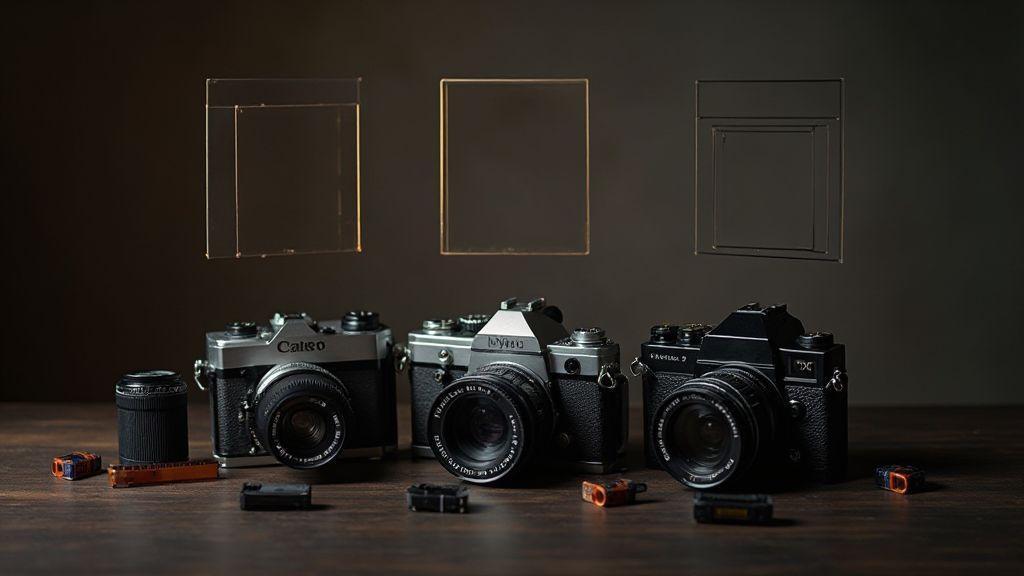
35mm camera formats group sensor sizes into familiar standards. Full-frame (roughly the size of a 35mm film frame) gathers more light for cleaner shadows and dramatic depth of field, making professional portraits and punchy landscapes feel tangible. It also helps when shooting wide angles without distorted perspective, which benefits architecture and travel shots.
APS-C and Micro Four Thirds are smaller formats. They’re lighter, cheaper, and still deliver superb image quality. A smaller sensor changes how lenses behave, affecting field of view and depth of field. You gain reach with tele lenses, handy for wildlife or sports, but background blur won’t be as pronounced as with full-frame. These formats keep your kit portable and affordable.
Understanding 35mm Camera Formats and Their Impact on Image Quality helps you decide when you need maximum punch versus practicality. Your choice affects lens selection, travel weight, and post-processing decisions. It’s about how you feel looking at your photos—whether intimate portraits or sweeping landscapes.
Understand sensor trade-offs before you buy
Before purchasing, weigh size, weight, and price against your goals. Bigger sensors improve low-light performance and DOF control but require larger bodies and pricier glass. If you travel a lot or shoot events, consider whether the extra gear is worth the payoff. A smaller sensor with good lighting and solid lenses can still deliver strong results.
Also plan your lens strategy. Wider lenses frame large scenes, while telephotos bring distant subjects closer. On smaller sensors, beware crop factors that change focal length math. If portability and cost matter, APS-C or Micro Four Thirds can be smart stepping stones without sacrificing image quality.
Why full frame vs crop sensor matters to you
Your choice impacts sharpness, depth, and light handling. With full frame, you gain larger sensors, more light, and smoother backgrounds, delivering cleaner photos in low light and richer color. Weddings, landscapes, and night scenes often benefit most. A crop sensor is lighter on your bag and budget and gives extra reach for action or wildlife, which can feel like a practical advantage when subjects stay distant.
In practice, full frame feels forgiving on edges and highlights, enabling more detail in skies and shadows. A crop sensor makes lenses behave like longer focal lengths, helping you get closer without moving. That can be a win for sports days, festivals, or street photography where you want distance without losing framing.
When choosing a camera, match budget, bag size, and shooting days. Full frame often costs more upfront but pays off in print and large displays. A crop sensor can still deliver gorgeous images with the right lens and technique. Your best choice fits your actual needs, not trends.
Full frame vs crop sensor explained
Full frame cameras gather more light, enabling shallower depth of field and cleaner shadows and highlights. This often translates to easier low-light portraits and detail-rich scenes. Crop sensors are smaller, so lenses act closer to teleconverters, giving extra reach but more depth of field for the same framing. They’re typically more affordable, lighter, and easier to manage for beginners or hobbyists.
For newcomers, a crop sensor can be a smart starting point with sharp images and a gentler learning curve. Full frame appeals if you crave top-tier low-light performance and creative blur. Your choice should reflect how you shoot most often, not what others say.
When crop sensors give you extra reach
Crop sensors magnify the image, letting you get closer with the same lens—great for sports, wildlife, or street photography when you can’t approach the subject. They also excel in daylight with deeper depth of field, keeping corners sharp in fast scenes. Lighter and cheaper, crop-sensor bodies let you carry more gear without breaking the bank.
For learners, a crop-sensor kit offers tangible wins: more reach, less gear, and a smoother path into manual settings. You can always upgrade later if you want the low-light magic of full frame.
Choose based on your shooting style
Your decision should reflect your daily workflow. If you chase low-light portraits, concerts, or landscapes with dramatic skies, go full frame for extra light and softer backgrounds. If you spend weekends at the ballpark, chase wildlife, or document events requiring distance and quick AF, a crop sensor is a smart ally. The best choice fits your hands, bag, and how you like to work.
Use crop factor to control your field of view
The crop factor helps you predict framing without new glass. It acts like a magnifying glass for your sensor, guiding your decisions about wide or tight shots. Multiply a lens’s focal length by the crop factor to get the effective focal length, a handy guide for planning composition before you shoot.
Think of it this way: on a smaller sensor, the same lens yields a different look, so choose longer lenses for tighter frames or frame wider with larger sensors when you want more of the scene. Understanding crop factor is a practical shortcut for predicting field of view and depth of field, not just chasing specs.
Crop factor and field of view made simple
Sensor size determines how wide or tight your images look. The crop factor tells you how much smaller your sensor is than full-frame. Multiply your lens’s focal length by the crop factor to get the effective focal length, which helps you predict framing.
With the same lens, a smaller sensor magnifies central scene details more. If you want a tighter look, use a longer lens or a smaller sensor; for more of the scene, go wider or use a larger sensor. The math stays the same, but your options feel more predictable when you keep crop factor in mind.
Understanding 35mm Camera Formats and Their Impact on Image Quality isn’t just nerdy talk. It helps you plan shots, compare gear, and avoid surprises. You’ll be more confident choosing a lens at the store or on location. Keep it simple: crop factor tells you how your field of view changes with different sensors.
Calculating effective focal length for your camera
To do this quickly, multiply your lens’s focal length by your camera’s crop factor. For example, a 35mm lens on an APS-C body (crop factor around 1.5) behaves like a 52.5mm lens in field of view. This number is your effective focal length and helps you imagine framing before you shoot.
If you switch bodies but keep the same lens, your view changes with the new crop factor. This difference becomes evident when lining up portraits or landscapes. The effective focal length helps you predict how close you’ll need to stand and how much background you’ll capture.
Check your camera’s exact crop factor in the manual or on the manufacturer’s site. Real-world results may vary slightly due to aspect ratios and sensor design, but the math remains solid. With this tool, you’ll frame deliberately rather than guess.
Match lenses to your sensor for better framing
Choose a lens based on your sensor’s crop factor, not just the printed focal length. For tighter frames on a smaller sensor, opt for a longer lens or back up more. For wider scenes, pair wide angles with larger sensors when you want more of the landscape in view. This alignment keeps your subject on target and your background in play.
Know your crop factor, calculate the effective focal length, and pick lenses that fit your sensor. Your framing becomes reliable, and you’ll spend more time creating and less time adjusting.
How 35mm formats affect depth of field for your shots
Depth of field (DOF) is the in-focus area of your image, and 35mm formats shape it a lot. A wider angle on 35mm tends to keep more of the frame sharp, while a longer lens or closer distance can blur the background more. You can isolate a subject or keep context; the format helps you tell the story in the moment.
Control DOF with three levers: aperture, focal length, and distance. A larger aperture (smaller f-number) yields shallower DOF. A longer focal length also narrows DOF, even at the same distance. Moving closer tightens DOF and increases subject presence. With 35mm formats, you can mix these tools to create either strong subject pop or broad scene detail. Practice a few combos to learn what works for your story.
Depth of field 35mm basics you need to know
A wider aperture creates a creamy background; stopping down brings more of the scene into focus. A standard 35mm lens gives a natural look, while longer lenses blur the background more. If you want separation without getting close, try a 50mm or 85mm on a 35mm frame; for more of the scene, go wider like 24mm.
Distance matters too. Move closer to tighten DOF and boost presence, or step back to widen DOF and preserve context. With 35mm formats, you can quickly test setups to find the right balance between subject isolation and scene detail.
Aperture and distance tricks to control blur
Start with aperture to sculpt blur. Open wide for a clean subject against a dreamy background, or stop down to keep more of the scene sharp. Distance tricks help you control separation without changing lenses: back up or use a longer lens to increase background blur. Test a few setups to find the look that serves your story.
Make backgrounds pop with the right format: wider formats with larger DOF keep more of the scene sharp, while tighter formats with shallow DOF isolate the subject for a cinematic feel. Pick the format that matches the mood you want—clarity or stylized blur.
Get richer tones with better dynamic range
You want photos that breathe, not flat gray. Dynamic range is the gap between the darkest shadows and the brightest highlights your camera can capture with detail. A wider range makes images feel three-dimensional and natural, especially in landscapes and scenes with tricky lighting. Your goal is to prevent clipping in both shadows and highlights.
With the right setup, you’ll see smoother transitions and less banding in shadows and bright areas. It’s about letting the scene breathe and choosing exposures that preserve detail across the spectrum. Richer tones come from a thoughtful blend of sensor capability, exposure strategy, and processing.
Dynamic range 35mm sensors explained
A 35mm sensor captures more tonal information than smaller sensors, providing more latitude to recover shadows and highlights in post. A camera with higher native dynamic range at your usual ISO gives you flexibility and helps you avoid heavy edits later. This is especially true in scenes like sunsets, backlit portraits, or high-contrast architecture.
To maximize range, shoot with lower ISO when possible and let the sensor handle the detail. Look for cameras that advertise robust DR at your preferred ISO, and balance exposure to keep both blacks and highlights readable. Richer tones come from a considered mix of sensor capability, exposure, and processing decisions.
Push your exposure confidently with more range
More dynamic range lets you nudge exposure brighter without losing detail in the blacks. Use a light metering approach, preserve midtone detail, and recover shadows and highlights in post. With careful data retention, you’ll gain flexibility and cleaner edits. Review your histogram to ensure you’re not clipping data on either end.
Improve resolution and sharpness in your images
Sharper photos come from smart choices about resolution, stabilization, and lenses. Start with the highest native resolution, stabilize your shot, and choose a well-corrected lens. If you shoot moving subjects, use a faster shutter and verify sharpness at 100% during review.
Save and post-process thoughtfully. Shoot RAW when possible, or keep JPEGs at the highest quality with minimal compression. In post, use light sharpening and clarity adjustments to preserve natural edges and avoid halos. On phones or compacts, stabilize and use pro settings to control focus, exposure, and ISO. The goal is clean edges and natural detail.
Finally, consider print size. A photo that looks sharp on screen may appear soft when enlarged. If you plan to print large, you may need more megapixels and better resolving power from your lens. Test by printing a small crop to verify detail retention. This practical check helps you decide when to upgrade gear or adjust technique. The aim is crisp edges, accurate detail, and a natural look.
Resolution and sharpness trade-offs across formats
Different formats trade off file size, speed, and detail. Full-frame usually offers richer tones and more detail but larger files and potentially higher ISO noise. APS-C works well for street or wildlife, with practical file sizes and strong sharpness. Micro Four Thirds can be extremely sharp in good light and offer compact setups, though they may show more noise in low light. Balance resolution needs with workflow pace and storage. If you shoot action, you might trade some resolution for faster AF and higher frame rates.
Lenses also matter across formats. A good lens on a smaller sensor can outperform a lower-end lens on a larger sensor. Pair sharp glass with a body that handles noise well, and you’ll feel crisper results than chasing megapixels alone. Remember, format choice also affects depth of field and how you read sharpness in your images.
Sensor megapixels vs lens resolving power
Megapixels matter, but they don’t tell the whole story. A 50 MP sensor can look soft if the lens can’t resolve fine detail. Conversely, a strong lens on a lower-megapixel sensor can deliver sharp results thanks to good resolving power. The goal is to match sensor resolution with the lens’s ability to resolve detail, so you don’t waste sharpness on limits of optics.
In landscapes, higher pixel counts help with cropping while preserving detail, but you still need clean optics and precise focus. For portraits, lens sharpness and sensor detail matter, with depth of field shaping the final look.
Balance pixels and optics for crisp photos
Achieve crisp photos by pairing a sharp lens with a camera that handles detail and noise well. Use a stable setup, focus accurately on the intended edge, and avoid excessive ISO which invites noise. When you crop, the lens quality is already doing the heavy lifting, so you’ll see crisper edges.
For best results, understand Understanding 35mm Camera Formats and Their Impact on Image Quality as a framework for choosing format to suit your scene and output. Your workflow should emphasize precise focus, careful exposure, and a lens capable of resolving the detail you want. The result is images that look sharp at web and print sizes, with natural edges free of artifacts.
Let your lens decide image quality, not just the sensor
The sensor is only part of the story. Sharpness, contrast, and character come from the combination of sensor, lens, and technique. The lens influences edge sharpness, micro-contrast, and color rendering. A high-quality lens can elevate a modest sensor, delivering depth and clarity that may outpace a cheaper glass on a pricier body.
Lens quality sets the ceiling for image quality. A top-tier lens with clean optics reduces aberrations and provides pleasing bokeh. If you skimp on glass, softness, distortions, and color shifts can appear even on advanced bodies. Think of the lens as the eyes your camera uses to view the scene. Pair smart glass with your body for better results, less post-work, and more enjoyment in the moment.
Lens impact on image quality facts
Lenses control edge sharpness, contrast, and color rendition, often more than the sensor alone. High-quality glass minimizes aberrations and maintains uniform sharpness across the frame. Cheaper glass may show softness, distortion, or chromatic aberration, especially wide open. Coatings reduce flare and ghosting, preserving contrast in bright light. Good coatings and precise element alignment also yield smoother bokeh and truer color.
Focal length and aperture interact with sensor size. For a 35mm format, your glass choice shapes field of view and depth of field in ways a larger sensor alone can’t fix. Your lens choice defines how you see the world—whether you want sweeping landscapes or intimate portraits. Choose glass that aligns with your creative vision.
How to pick lenses that suit your 35mm format
Start with your typical shoots. Street and portrait work benefits from a fast standard zoom and a mid-tele prime; landscapes benefit from a wide-angle prime with minimal distortion. For video or portrait work, seek lenses with smooth manual focus and pleasing bokeh. Your 35mm format shines when you choose lenses designed to maximize sharpness and color fidelity on that frame.
Test real-world performance: look for strong center-to-edge sharpness, minimal chromatic aberration, and consistent performance when stopped down. Check coatings for flare resistance in bright light. If possible, compare two lenses on your body to see how they render contrast and micro-contrast in your typical lighting. Let your eyes decide what feels right.
Also consider autofocus speed and accuracy. A precise, quiet motor helps keep subjects sharp in daily use. Weigh weight and size against travel needs. A lighter lens can be delightful to carry, but it should still deliver the image quality you want. Choose glass that fits your style and 35mm workflow.
Invest in glass to raise your image quality
Quality glass pays off in the long run. A well-chosen lens can dramatically improve overall image quality, letting your sensor do its job with less effort. Expect better contrast, more accurate colors, and less post-processing time. Investing in glass supports your ability to capture moments as you remember them.
Choose grain or noise for your aesthetic
Grain and noise set the mood. Grain evokes a classic, film-like warmth, while digital noise can read as gritty or modern depending on treatment. Your choice should suit the story and look you’re chasing. For timeless vibes, lean into grain; for crisp, contemporary edges, controlled noise can add texture. Your decision shapes the character of your final image.
Consider subject and lighting. In low light, grain can soften rough patches and add glow, while noise can reveal texture in shadows. For portraits, grain can feel flattering; for street or documentary work, a touch of noise can add grit. Test both looks on common scenes to see what resonates.
Think ahead to editing. Grain responds well to film simulations; digital noise can be tamed with exposure, contrast, and color adjustments. Keeping a few presets preserves consistency across shoots. Understanding 35mm Camera Formats and Their Impact on Image Quality will guide how you apply these textures in your workflow.
Film grain vs digital noise: what to expect
Film grain is a natural by-product of how film records light, yielding a random, organic texture that softens fine detail and adds warmth, especially in midtones. Digital noise comes from sensor limits at high ISO and can appear as colored speckles. Grain tends to feel cohesive and vintage; noise can be controlled and styled for a modern edge.
Grain is easier to use aesthetically if you’re aiming for a timeless look. Digital noise requires careful ISO, exposure, and lighting to avoid dominating the image. In mixed lighting, grain can smooth transitions; noise can emphasize texture. Your texture choice should support the subject, not distract from it. Understanding Understanding 35mm Camera Formats and Their Impact on Image Quality helps you apply these textures consistently.
How sensor size affects high ISO noise
Smaller sensors typically show more noise at high ISO; larger sensors stay cleaner. If you shoot in dim light or require fast shutter speeds, a larger sensor yields cleaner results and more natural skin tones. It doesn’t fix exposure mistakes, so good lighting and proper exposure remain essential. Think of it as a larger canvas giving you more room to push ISO without sacrificing texture.
Use this perspective like painting: a bigger canvas handles detail and shading better, letting you push ISO with fewer penalties. Sports, concerts, and night photography reveal the clearest differences between sensor sizes. Larger sensors offer more room to grow while preserving texture.
Control texture with format and ISO
Texture comes from both format and ISO. For more pronounced grain, choose a format that preserves film-like texture or apply film simulations. For subtler texture, keep ISO low and preserve midtone detail. If you want digital noise for a modern edge, push ISO carefully and balance exposure so noise adds character rather than chaos.
Experiment with a couple of looks: a clean base with moderate ISO and a second layer with a subtle grain or noise texture. See what suits your subjects—portraits may benefit from milder texture, while landscapes can handle bolder grain. Understanding Understanding 35mm Camera Formats and Their Impact on Image Quality will guide texture choices across scenes.
Boost low light shots with smart ISO and format choices
In dim rooms, keep shutter speed steady while allowing the sensor to pick a modest ISO. Use Auto ISO with a ceiling you’re comfortable with; for very low light, first try a wider aperture before raising ISO. RAW saves you the most data for recovery, while high-quality JPEGs preserve detail when RAW isn’t available. Always review your histogram to ensure you’re not losing shadow data. Your workflow should favor formats that preserve detail in low light.
Consider lighting adjustments. A little added light goes a long way for noise control. When light is scarce, use broad light sources and avoid aggressive NR that can soften detail. Smart ISO and thoughtful format choices help you master low-light shots.
High ISO performance 35mm varies by sensor
Not all 35mm sensors handle high ISO the same. A newer sensor with better readout and noise reduction yields cleaner high-ISO results. Compare real-world samples rather than specs alone when choosing models. A practical test: shoot a fixed scene at ISO 3200–6400 and compare grain patterns, color integrity, and edge clarity. Your choice should hinge on how you plan to use the images—portrait skin needs smoother tonality; landscapes demand sharper edges.
Dynamic range also matters. A sensor with wider DR keeps more shadow detail as you raise exposure, reducing banding and preserving color in high-contrast scenes. If you often shoot where light swings from bright to dark, a sensor with robust high-ISO performance and strong DR will save you from constant adjustments. Understanding Understanding 35mm Camera Formats and Their Impact on Image Quality helps you choose gear for maximum usable data at your typical ISO.
Practical tips to reduce noise in your photos
Use mindful shooting habits to curb noise. Shoot RAW, lock exposure, and stabilize your stance to reduce blur. Add a touch of light when possible; even a small amount of extra illumination can lower the needed ISO. If you must shoot handheld, select a shutter speed you can reliably maintain and raise ISO only as needed. Your goal is the cleanest file possible.
Post-process non-destructively. Use shadows and highlights adjustments to recover detail rather than heavy noise reduction. Apply NR selectively to areas that don’t need it, masking it to preserve texture in skin and fabric. Keep transitions natural to avoid a plasticky look. Understanding Understanding 35mm Camera Formats and Their Impact on Image Quality will guide how you treat texture in post.
Use format and technique to shoot cleaner images
Prefer RAW for maximum control. If shooting JPEG, choose the highest quality and apply light in-camera NR only when speed is essential. In low light, open the aperture to gather more light and keep ISO as low as feasible to maintain clean shadows. Practice solid shutter technique—steady hands and a solid stance reduce blur, which makes noise easier to spot.

Junior Souza is a passionate analog photographer and the mind behind estoucurioso.com. With a camera always in hand and a roll of film never far away, Junior has spent years exploring the world through a 35mm lens — learning, experimenting, and falling deeper in love with the slow, intentional process that only analog photography can offer.
What started as pure curiosity quickly became a lifestyle. From testing different film stocks under harsh light to hunting vintage lenses at flea markets, Junior believes that understanding your tools is just as important as developing your eye.
Through estoucurioso.com, he shares everything he has learned along the way — the techniques, the mistakes, the references, and the stories behind the frames. His goal is simple: to build a space where beginners and enthusiasts alike can grow, get inspired, and never stop being curious.
Always learning. Always shooting.