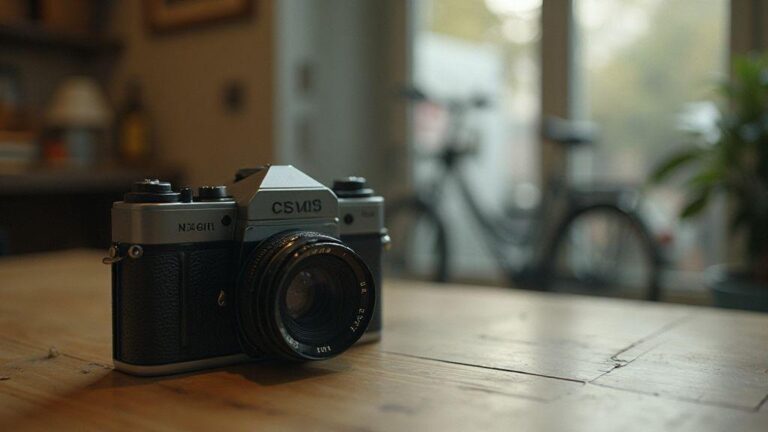

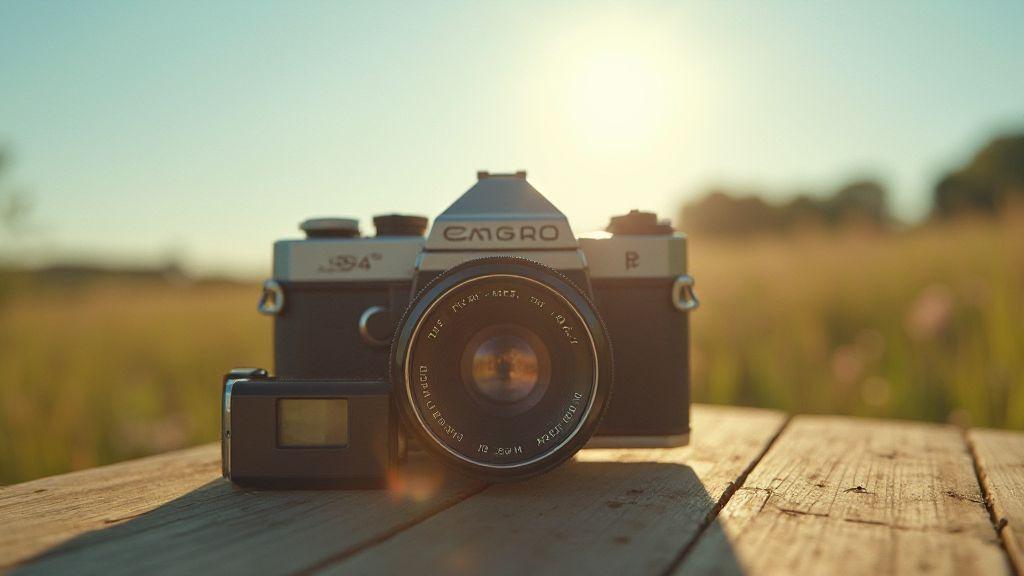
Use f/16 and 1/ISO in bright sun
In bright sun, apply the Sunny 16 mindset to dial in a quick, reliable exposure. Set a bright baseline so photos aren’t underexposed or washed out. The simple idea: in full sun, aperture f/16, shutter speed equals your ISO, and the scene stays natural. You’ll see subjects pop with clean highlights and accurate shadows, whether you shoot film or digital. Think of it as a shield against harsh midday light.
With f/16 and 1/ISO in bright sun, you keep highlights from clipping while midtones stay readable. For ISO 100, use f/16 and 1/100s (or closest standard). If ISO changes, the shutter speed shifts to keep the balance. The goal is even lighting so skin tones read correctly and your subjects aren’t over- or under-lit. It’s a practical anchor for fast-paced shooting.
As you practice, you’ll see how this baseline turns exposure from instant judgment into confidence. You won’t guess every time you step into a sunny street or a glare-filled yard. With f/16 and 1/ISO, you’re giving your camera clear instructions: contain the sun’s punch and keep your focal point sharp. The more you use this method, the more you trust your eye for composition while exposure stays steady. A simple habit that delivers sharper whites and richer textures.
How the Sunny 16 rule works
The Sunny 16 rule is a quick way to estimate exposure in bright daylight. You’ll learn that in full sun, a solid starting point is f/16 and a shutter speed that matches your ISO. If you raise ISO, shutter speed rises; if you lower ISO, shutter speed drops. This keeps exposure even and avoids blown highlights. It’s a practical shortcut for outdoor shooting when subjects move fast or light changes quickly.
The core idea is simple: bright sun lets your camera do most of the heavy lifting. Your lens, aperture, and shutter balance light so tones stay natural. The rule adapts to everyday scenes—beach, concrete, or a sunny park bench. Start here, then adjust if the scene has unusual brightness or contrast. With this rule in your toolkit, glare and deep shadows won’t fool you.
Using Sunny 16 in bright sunlight
Apply Sunny 16 by starting with the baseline and tailoring to your shot. Set aperture to f/16 for standard depth of field and prevent highlight clipping. The shutter speed should match your ISO; at ISO 200, you’d use 1/200s. For a softer look, open the aperture a notch or two and compensate with shutter speed, but keep the sun as your reference point. Images stay detailed in bright areas without flattening the subject.
With growing comfort, you can move away from the strict f/16 baseline. Brighter light calls for smaller aperture or faster shutter; dimmer light invites a larger aperture or slower shutter. The Sunny 16 rule isn’t a prison; it’s a starting block that gives you confidence while you experiment with tone and texture. You’ll flow through scenes with fewer guess the exposure moments.
Basic Sunny 16 exposure example
Let’s walk through a straightforward scenario. In bright sun with ISO 100, start at f/16 and 1/100s. If the subject sits on a sunlit sidewalk with high contrast, skin tones stay clean and highlights remain bright but not blown. For a shallower look, open to f/8 and push to 1/250s, ensuring the subject remains well lit. With ISO 400, baseline is f/16 and 1/400s, preserving sky detail while keeping the subject from going too dark.
Use this example as a quick reference to gauge how ISO, aperture, and shutter speed interact under bright sun. The Simple Sunny 16 Rule for Manual Exposure in Film Shooting helps you handle street scenes, portraits, or landscapes with consistent, repeatable results—clean highlights, natural midtones, and steady exposure.
Set Sunny 16 aperture and shutter speed
Setting the Sunny 16 rule gives you a reliable daylight starting point. Pair a bright scene with a midrange f-stop and a matching shutter speed so your photos aren’t overbright or too dark. Think of it as tuning a guitar: you want harmony, not squeal. In practice, start at aperture around f/16 and use a shutter speed equal to your ISO. For ISO 100, that’s about 1/100 (roughly 1/125) for a sunny scene. It’s simple, consistent, and keeps you in the right ballpark so your creative ideas aren’t chasing exposure.
As you gain confidence, you can move away from strict f/16. The core idea remains: match shutter speed to the scene’s light so your subject isn’t washed out or murky. Keep a quick reference in your bag to snap to when you’re in bright sun and need to act fast.
Remember: Sunny 16 is a starting point, not a law. You may want shallower depth of field for portraits or a faster shutter to freeze action. Begin with a sunny-day mindset, then nudge settings to fit the scene. Your goal is confidence, not ceremony.
Match aperture to light quickly
When light is strong, you can drop from f/16 to f/11 or f/8 and adjust shutter speed to keep exposure balanced. Estimate this quickly in your head as you move through a scene. If you want more detail in shadows, open the aperture a stop or two and compensate with shutter speed or ISO. Opening the lens means more light, so you’ll need a faster shutter or a lower ISO to avoid overexposure.
This comes with practice. If a doorway under noon sun is too bright, switch to f/11 and keep 1/125s, or stay at f/16 and move to 1/250s. Either way, you maintain balance while preserving edges and color accuracy.
Turn ISO into shutter speed
If you’re indoors or can’t change light, convert ISO changes into shutter speed adjustments. A higher ISO adds sensitivity, letting you slow the shutter to bring in more light without losing mood. For example, moving from ISO 100 to 400 lets you drop from 1/125s to 1/60s at the same aperture. This keeps your subject sharp in motion while maintaining brightness.
Use this trick carefully: higher ISO adds grain, so balance speed with image quality. For kids playing outside, a faster shutter at modest ISO can freeze action without excessive noise. If you prefer a clean look, you may opt for a longer shutter and lower ISO to minimize noise, even if you need more light or time to compose.
Practice rule-of-thumb: increase ISO by one stop to gain roughly one stop of shutter speed, preserving exposure headroom. Apply this as you test new lenses or scenes, so you can see balance shifts in real time.
Sunny 16 aperture and shutter speed quick guide
In bright sun, start at f/16 with a shutter of 1/ISO. For ISO 100, this is about 1/100 or 1/125. From there, adjust to change depth of field or motion.
For shallower depth of field or faster action, move to f/11, f/8, or f/5.6 and adjust shutter to keep exposure steady. Opening the aperture increases light leakage, so compensate with a quicker shutter or a lower ISO.
To soften light or add mood with more grain, raise ISO and slow the shutter slightly. The goal is to keep the subject clear while the background gains character, building confidence through intuition and practice.
Match film ISO for correct exposure
Your exposure starts with the film’s ISO. ISO 400 balances grain and brightness, while higher ISO requires less light and lower ISO needs more. Your metering mode (spot, center-weighted, or evaluative) guides where the camera reads light. Use spot metering to lock exposure on a subject, evaluative for the whole scene, and pick what matches your scene and intent.
When metering, compare the subject’s brightness to the background. If the subject is much brighter, you might overexpose the scene by following the meter exactly. Dial in a half- or full-stop underexposure to preserve highlights. If the subject is dark, push exposure a notch. Bracket a few frames to see how film renders.
Metering becomes a habit you trust. Start by choosing ISO, then set metering to center-weighted for general scenes or spot metering on the subject you want to stand out. Your meter guides you toward an exposure that aligns with your ISO, giving repeatable results across shoots.
When to push or pull film
Pushing film exposes for more light than the box rating, developing longer or warmer. Pulling does the opposite. Pushing increases grain and contrast; pulling softens tones. Start with small moves, bracket, and compare results across frames. Plan development time and temperature with your lab—these choices matter more than you expect. Your aim is consistent tone and grain that suit your style.
Keep a notebook: note development times and stock quirks so you can repeat or adjust on future shoots. The goal is reliable tone and grain that suit your look.
Shoot without a light meter with confidence
Exposures can be nailed without a meter by trusting your eyes and a few solid rules. Build a workflow: quick scene assessment, midtone target, and adjustments as you go. With practice, your photos become deliberate rather than guessed. Anticipate how the light shifts in sun, shade, backlight, or reflectors, and use a quick metering backup only when needed.
Develop a routine to shoot with intention, not fear of underexposure or blown highlights. Your eye and process will grow more dependable with each scene you practice.
Rely on rule over a meter
When you don’t have a meter, use a solid rule of thumb to guide settings. Start with a baseline that works in many sunny conditions, then tweak for contrast and subject brightness. The Simple Sunny 16 Rule for Manual Exposure in Film Shooting is a dependable starting point. In shade or indirect sun, adjust by opening or closing a stop as needed. This approach offers speed and confidence without chasing perfect measurements.
Not every scene fits perfectly. If light is harsh or the subject has strong contrast, adjust more than one variable. Your eye tells you to push or pull exposure to preserve the details you care about. The beauty of this approach is speed: you make deliberate choices based on the scene you see.
Simple checks you can make
Decide what should be the centerpiece. If the subject should pop, bias exposure slightly brighter. If you want mood and texture, push shadows a touch darker. Your goal is to keep essential detail in the zones that matter for your story.
Test a quick exposure mentally by imagining highlight placement. If the brightest part would blow out, back off a notch. If shadows hide detail, open up a touch. These mental checks keep you in the moment, not measuring every detail. A midtone bias helps skin look natural, preserving texture without flatness.
Use a quick physical cue: position your subject to the light and think in terms of midtones. Small checks add up, letting you shoot with confidence and keep exposure aligned with intent.
Exposure without light meter checklist
- Identify the main light source and its effect on your subject.
- Decide what should read as the midtone in your scene.
- Apply the Simple Sunny 16 Rule for Manual Exposure in Film Shooting as a baseline.
- Adjust one stop at a time if highlights or shadows look off.
- Check skin tones or key texture to ensure detail remains.
- Review overall balance before you shoot again.
Adjust for clouds, shade, and reflectors
You’ll feel more in control when you adjust exposure based on the light around you. Clouds soften light, shade lowers contrast, and reflectors bounce light back onto your subject. Start by estimating brightness; if the sky is white, you might underexpose slightly and open up a touch. In dense shade, brighten more than you expect. If a reflector lifts shadows, back off slightly to avoid blown highlights. Use quick checks, then confirm with a view. Clouds bring variability; a bright edge can fool your meter, so test with a quick shot and check the histogram. Reflectors lift shadows without washing out highlights, so let them help you shape exposure. The goal is balance, not guessing blindly.
With clouds, shade, and reflectors, you’re sculpting light like a painter. Use quick metering, then confirm with a test shot. Your success comes from intentional adjustments, not blind guessing.
One-stop and two-stop changes
One-stop or two-stop changes help when light shifts. A one-stop change doubles or halves the light, a two-stop change doubles that again. Use these moves when moving between sun and shade or when lighting shifts dramatically. Shoot, review, adjust by a stop, and repeat. One-stop changes are safe and predictable; two-stop changes wake you when the scene is dramatically different. Use exposure compensation to apply these shifts quickly. Carry a note: One-stop = 1 EV, Two-stop = 2 EV to speed things in the field.
Practice with simple scenes to build speed and accuracy.Bracket and test to learn how your film renders at different stops, and record settings in a small notebook for quick reference on future shoots.
Compensate for snow and sand
Snow and sand can fool meters because they’re bright. Push exposure a notch to preserve texture: 1 stop is a good start; in ultra-bright scenes, 2 stops may be needed to protect highlight detail. Use manual mode or exposure compensation to lock in shifts. Snow has texture; overdoing exposure can erase it. Check histograms to keep highlights toward the middle-right. Sand is bright but warm; avoid excessive overexposure on skin tones near the beach. Practice with different compensations to sense the balance between sharp highlights and readable texture.
Sunny 16 rule tips for mixed light
Sunny 16 works, but mixed light needs nuance. Start with the idea that on a sunny day, set aperture to f/16 and shutter to 1/125 or 1/150 at ISO 100. From there, tweak for brighter or dimmer scenes. In mixed light, adjust by half to a full stop as needed. In shade with bright sun on a subject, drop shutter or open the aperture to keep skin tones natural. If open shade has a bright sky, close the aperture slightly to protect highlights.
Test a couple of quick frames when light shifts. If skin looks too cool, warm the white balance or bump exposure slightly to preserve detail. You’ll learn when to hold to Sunny 16 and when to bend the rule for mixed light. The Simple Sunny 16 Rule for Manual Exposure in Film Shooting can be a practical baseline, but your eye and scene guide you to the best balance.
Add stops for filters and polarizers
Filters or polarizers change how much light reaches your film. Each stop gained or lost influences exposure, so adjust accordingly. A one-stop filter darkens the image by one stop unless compensated. A polarizer can also reduce light by about one stop, depending on angle and scene. Read the scene with new eyes and decide if you want a brighter or moodier result. The goal is balance—read the scene and end up with what you see on film, not just what the meter says.
Carry a mindset shift: know each filter’s strength and test its effect in various scenes. When shooting bright sky with a polarizer, expect about one stop of loss; with a neutral density filter, two to three stops or more may be lost. Use simple notes to track filter effects in sun, shade, or mixed light. In busy scenes with bright highlights, filters can control glare and protect exposure. Test by shooting two frames: with and without the filter. Compare to see which look you prefer. With practice, you’ll push or pull exposure to shape mood and composition. Treat filters as creative tools that require quick math to keep exposure clean.
How filters change exposure
Adding a filter changes exposure by the filter’s stop value. A one-stop filter requires adding one stop of light back into exposure—open the lens or slow the shutter a touch. The goal is a healthy histogram and detail in highlights and shadows. Polarizers remove glare and reduce light by about one stop, while neutral density filters can cut more. If you want a brighter look with saturated color, you may accept a slight exposure drop and adjust in-camera or by pushing exposure if your film handles it well. Plan your shot direction and lighting to maximize color and mood.
A polarizer often slows shutter speed by about one stop in daylight. If you’re handholding and chasing brightness, you may lose sharpness; use ISO or a slower shutter to compensate. On a tripod, a longer shutter helps preserve color and reduce glare. Film users usually gauge exposure by metering and checking frames; use the Simple Sunny 16 Rule for Manual Exposure in Film Shooting as a baseline, but tailor it to your film’s response and the filter’s impact.
Film camera exposure settings for filters
For film, set a base exposure and apply the filter’s effect with calculated adjustment. A one-stop filter means adding one stop of light back (open the lens or slow the shutter by a notch). If unsure, bracket by half a stop on either side. With a polarizer, anticipate about a one-stop loss and adjust shutter or aperture to compensate, keeping your creative intent in focus. Track your film stock quirks and how it renders color and contrast in your environment. The Simple Sunny 16 Rule for Manual Exposure in Film Shooting is a handy reference in a rush, but adapt it to your stock and filter effects. Your camera, your rules, your result.
Conclusion
Know when Sunny 16 won’t work well
Sunny 16 is a handy starting point, but not magic. In backlit situations or with pale skin or shiny surfaces, meters can misread. Trust your eyes and adjust; Sunny 16 is a map, not a GPS route. Recognize when the rule leads you astray so you can compensate quickly.
Backlighting or low-contrast scenes can fool the Sunny 16 assumption. If the subject is lit from behind, meter for highlights and push exposure to reveal details in the face. In high-reflectance scenes, meters can be biased toward bright highlights; you may need to adjust exposure to preserve texture. The rule remains useful, but it isn’t gospel in every scene.
Backlight and low-contrast scenes
Backlight can put a subject in shade while the background burns. Meter for midtones or slightly brighter to recover facial texture without letting the background dominate. In low-contrast scenes, boost contrast with a quick tweak or add light. A spot-meter on skin or a reflector can lift shadows without washing out highlights.
High-reflectance subjects need change
Shiny surfaces bounce light unpredictably. A bright white shirt under sun may force underexposure on the meter while appearing gray on film. Shift exposure by one stop or more as needed. Snow or chrome may require rating your film or adjusting development later for texture. Don’t chase exact Sunny 16 numbers—seek the detail you want to keep. Meter a non-reflective area near the subject and compare, then adjust to prevent blown highlights.
When Sunny 16 isn’t enough
In strong sun with stark highlights and deep shadows, Sunny 16 can yield blown highlights or muddy shadows. Use exposure compensation or bracketing: one metered exposure, one darker, one brighter. For film, consider pushing or pulling development to preserve extreme details. Your aim is a balanced exposure that preserves mood, not perfect textbook readings.
Practice shots and simple exercises
Practice shots build confidence by showing how light, distance, and film react in real time. Start with a simple scene—books on a table by a sunny window—and shoot at moderate distance. Move light or distance slightly and compare grain, contrast, and density. Treat each shot as a tiny experiment, mapping responses in your head and in a practice log. You’ll gain a library of how bright sun, shade, and mixed light render on film and learn to trust your hands, breath, and posture when framing.
In practice, do three quick frames: one as-is, one with a small exposure change, and one with a slight camera move. Review later to see how the film reacts to exposure shifts. The Simple Sunny 16 Rule for Manual Exposure in Film Shooting remains a reliable starting point you can test and refine. Keep notes to fast-track future shoots and build a repeatable workflow that matches your vision.
Your drills should be simple: a 5-shot sequence with exposure changes of one stop up or down between frames. Identify patterns: which stocks hold highlights, where grain becomes obvious, and how color shifts with exposure. The aim is predictable results you can reproduce, not luck.
Bracket by one stop each shot
Bracket by one stop to train your eye for your film’s range. Shoot three frames in a simple scene: base exposure, 1 stop, and -1 stop. Notice how 1 boosts shadows and might bloom highlights, while -1 calms midtones and can mute bright areas. This exercise helps you read film response and decide quickly on real shoots. Keep notes on camera settings, stock, and lighting for each frame to identify trends and refine your approach.
You can scale up: brackets of four shots with -1, 0, 1, and 2 stops in a single scene. Maintain consistent metering and subject setup to map how each stop affects mood and detail. Bracketing becomes your shorthand for locking in a mood or level of detail.
Keep a film photography exposure guide log
A log of base exposure, stock, lighting, and results accelerates future shoots. Track which stocks handle bright sun, shadows, and grain best, and note development plans. Your log becomes a quick reference before shoots, helping you pick stock, exposure, and development with confidence.
Record metering method, filter use, and post-processing attempts. Add notes about which frame felt like the truth of the scene and which leaned toward mood. The log should be practical and honest: what worked, what didn’t, and what you’d change next time. With time, your log becomes your fastest route from idea to execution, helping you trust your path.
Film photography exposure guide practice
Focus on a simple exposure guide in practice. Use a small scene—a chair in a bright room—to work through base exposure, 1, and -1 stops in quick succession. Review results to see how highlights, midtones, and shadows respond on your chosen film. This builds intuition and reduces guesswork on real shoots. Keep the process simple: meter, expose, shoot three frames, and compare. Quick development checks or contact sheets help you see outcomes and identify patterns to rely on in future shoots.
Pair practice with handle-long-exposures and reciprocity notes. The goal is clear, stable results you can repeat, not a single lucky shot.
Handle long exposures and reciprocity
Long exposures need a balance between motion and light. Use a tripod and remote or timer to prevent camera shake. Expect color shifts or grain; adjust your workflow accordingly. Reciprocity means the film becomes less responsive with very long exposures. Shorten exposure blocks and blend frames in post or adjust aperture/ISO to maintain mood and detail. Meter highlights first, then check shadows. A quick test frame helps ensure you’re not overdoing it.
Over time, you’ll know your baseline exposure and test with quick grabs to confirm. A calm, detailed final image comes from staying within the film’s sweet spot.
Watch for reciprocity failure
Reciprocity failure shows up as dimmed shadows or color shifts in long exposures. Shorter blocks of exposure and blending frames help avoid this. If you frequently push exposure time, consider a small ISO bump or a slightly wider aperture to keep the film responsive. Use a light meter to test a few trials and compare results to find your reliable range.
The longer you wait, the more fragile the data becomes. Check histograms and highlights after test frames. If clipping appears in bright areas or shadows become muddy, adjust. Practice sequences to learn your film’s real-world behavior.
Compensate for long shutter times
Long shutter times require balancing motion and light. Start with a baseline exposure, then add small adjustments if motion or blur creeps in. Use gradual changes rather than big jumps. If the frame is too dark, raise ISO slightly or open the aperture. For deeper depth of field, accept a slower shutter while keeping the scene in focus from front to back. Wind or moving water may need a shorter shutter; a neutral density filter can help extend exposure without blowing highlights. Practice to learn the right combination for each scene.
Sunny 16 long exposure adjustments
The Sunny 16 rule works for longer exposures too, with adjustments. If you want a longer shutter in bright sun, drop to a smaller aperture or push ISO a notch to balance exposure. This keeps highlights from clipping while preserving shadow detail. If you need more time on the shutter, try moving to a smaller aperture or adding a neutral density filter. The idea is to maintain a clean, readable final image while respecting your film’s limits.
Practice by moving the shutter slower and adjusting the aperture a notch or two, or using a fixed ISO with a neutral density filter to extend exposure time. Your takeaway: use the Sunny 16 baseline as a starting point, then refine for longer exposures by narrowing the aperture or modest ISO changes to keep the look intact.

Junior Souza is a passionate analog photographer and the mind behind estoucurioso.com. With a camera always in hand and a roll of film never far away, Junior has spent years exploring the world through a 35mm lens — learning, experimenting, and falling deeper in love with the slow, intentional process that only analog photography can offer.
What started as pure curiosity quickly became a lifestyle. From testing different film stocks under harsh light to hunting vintage lenses at flea markets, Junior believes that understanding your tools is just as important as developing your eye.
Through estoucurioso.com, he shares everything he has learned along the way — the techniques, the mistakes, the references, and the stories behind the frames. His goal is simple: to build a space where beginners and enthusiasts alike can grow, get inspired, and never stop being curious.
Always learning. Always shooting.