
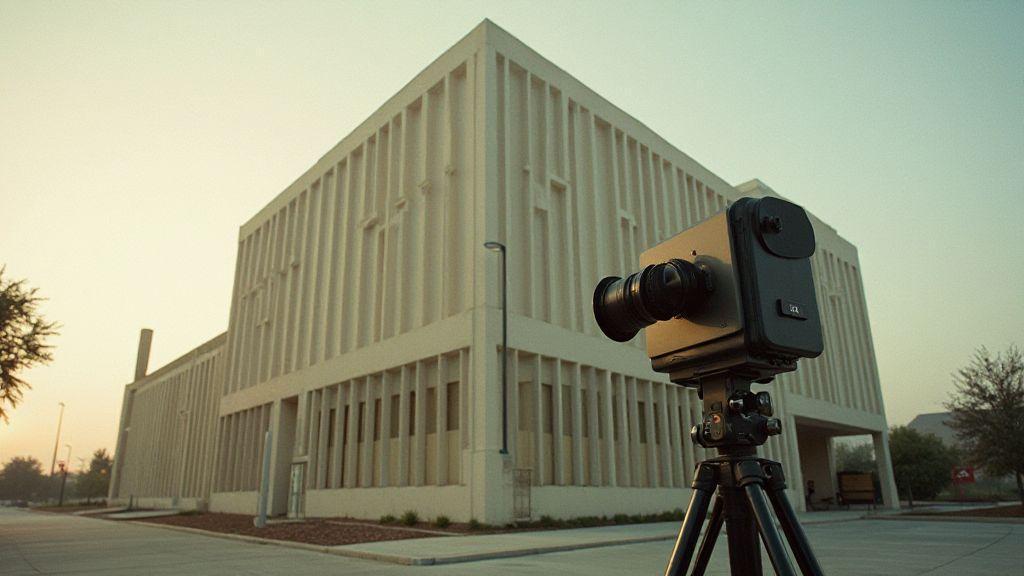
Perspective Control in Framing for Architectural Analog ShotsAnúncio
Perspective Control in Framing for Architectural Analog Shots matters because it keeps building geometry true—verticals stay vertical, horizontals stay level—as you move closer or farther away. This delivers an honest view that matches what you see and preserves accuracy and mood. It calms the frame by preventing keystoning and warped details, so doors, windows, and walls read clearly. With proper perspective control, you guide the viewer along a balanced façade and tell the story of the space without distraction. This approach also streamlines work: when lines and scale stay consistent, you spend less time on fixes in post and more on composition choices that matter.
Consciously managing perspective helps your shots feel calm rather than chaotic. Without control, tall structures can tilt or doors appear to widen at the top, pulling attention away from the design. Perspective control lets the eye travel smoothly across the façade, keeping the design readable and honest. It also speeds production: predictable geometry frees time for framing decisions that reveal texture, rhythm, and light.
How converging lines change composition
Converging lines draw the eye toward the center and can make a corner feel dramatic. Shooting from a corner often makes walls meet at a point, adding depth but risking a flattened scene if convergence is too strong. Use just enough convergence to guide the eye without distorting space. Step back or lower your camera to keep verticals straight while still leveraging convergence for interest.
Convergence shapes mood: a slight tilt feels dynamic, a dead-on vertical feels calm and honest. Your choice should match the architectural story you want to tell. If realism is the goal, minimize extreme convergence; for drama, balance convergence with other lines in frame. Details like doors, columns, and windows should remain legible, so adjust height or distance to preserve alignment. Test a few positions and compare how the eye moves through each frame. The best shot keeps supporting lines clean while letting the design breathe.
How viewers read verticals and scale
Viewers anchor their perception on verticals. If verticals lean, the viewer’s sense of order erodes. Keep verticals true to convey the space’s power and dignity, and avoid keystoning unless it’s a deliberate effect. Scale matters: misjudged distance makes doors look too small or windows too large. Adjust height and distance so size relationships feel natural, and use familiar objects (a person or car) to gauge scale quickly.
Consistency helps readers focus on texture, rhythm, and light. When verticals stay upright and scale reads plausibly, the architecture reads as an honest portrait of space.
Key visual goals for architectural analog shots
- Show clean lines and true shapes: verticals straight, horizontals level, with minimal distortion.
Tilt-shift framing techniques basics
Tilt-shift framing isn’t magic; it’s a set of controls that lets you bend perspective with intention. Tilt rotates the lens plane relative to the sensor; shift slides the lens to correct keystones and distortion. Together, they shape depth, focus, and the plane of critical detail. Tilt creates a miniature-world feel or a separation between foreground and background; shift preserves orthogonality and keeps lines honest.
The basics focus on two ideas: depth and focus. Tilt adjusts the relationship between subject and background, letting you keep both sharp or selectively blur one. Shift maintains straight lines and straight edges, preventing keystoned distortions. Practice involves tilt a little, shift a little, and compare lines. Over time, your frames will feel deliberate rather than accidental.
Perspective control changes storytelling: a slight tilt can separate foreground from background, making the subject pop without losing context. A careful shift keeps architectural lines intact while preserving the space’s believability. The aim is to guide the eye through the space, not to showcase a trick.
When to use tilt versus shift
- Tilt is ideal for mood and a condensed spatial feel. It can create a dreamlike sense of scale or isolate a subject from a busy background by selectively sharpening it. Use tilt to emphasize atmosphere or a surreal vibe.
- Shift is best when accuracy matters. Use it to keep verticals true, prevent distortion in tall structures, and align doors and windows. Shift also corrects keystones when the camera isn’t perfectly level, helping the scene read as a real space rather than a photo trick.
Sometimes you’ll combine both: tilt shapes the feel, shift preserves honesty. Your choice should serve the story you’re telling and the subject’s prominence in the frame.
Simple tilt-shift framing techniques you can trust
- Start with a flat horizon or clean architectural line, then tilt subtly to push the background into a controlled blur while keeping the subject sharp.
- Use shift to fix lines: if a building tilts, shift to bring verticals back to vertical and straighten edges.
- When framing interiors or staircases, shift helps keep railings and walls parallel to the frame.
- Combine them with intention: tilt to create mood, shift to maintain order. Practice small increments and evaluate whether the result reads as intentional.
Quick tilt-shift checklist
- Identify subject and space to control.
- Check if perspective lines are straight; plan a shift if needed.
- Decide whether to soften the background with tilt or keep lines in line with the subject.
- Start with small tilt adjustments, then apply shift.
- Review balance: subject prominence, line integrity, and depth.
- Repeat with varied angles to train your eye.
Correcting converging verticals in film
Clean, straight verticals are essential for realistic architecture. Even a slight tilt can cause verticals to converge, signaling a pro misstep in post. Plan ahead on set to protect framing and save time later. Perspective changes with lens choice, height, and movement, so assess the scene as you set up and maintain verticals like a grid you’re preserving.
Balance technical fixes with creative choices. Slight foreshortening or a touch of tilt can feel purposeful, but orthogonality is often preferred. Minimize slant while keeping the scene natural. With careful attention to camera height, perspective, and stance, you’ll push toward a crisp, believable architectural look that holds up under scrutiny.
Use shift to keep verticals straight
Shifting helps align edges with the frame, preventing leaning verticals and stabilizing the space. Nudge the camera so lines run parallel to the frame edge, and adjust height to fix convergence without sacrificing depth. On-set shifts, tripod tweaks, and careful framing keep perspective honest and the shot dynamic.
Tools for correcting converging verticals in film
- Straightedges, levels, andOn-set checks verify verticals as you shoot.
- Perspective-control accessories and focal-length choices minimize distortion.
- Software can help in post, but the goal is to reduce corrections in advance.
Combine on-set checks with deliberate rig adjustments to minimize later fixes.
On-set tests for vertical control
Before locking the shot, test frames from different distances and angles to spot slanting lines. Verify horizon alignment and the relationship of verticals to key features. Small adjustments can eliminate convergence before you cut.
Shift lens composition for architecture
Shift lenses help you control perspective and balance in urban scenes. Think of the scene as a staircase of lines: shifts steady the staircase, while tilt shapes the plane of focus. With practice, you’ll lock tilt and shift to produce a clean, confident look that feels deliberate.
Framing tall façades with a shift lens
- Keep base grounded and crown intact by using shifts to maintain verticals and edges.
- Use modest upward shifts to preserve the top without crowning distortion.
- Ground the frame with foreground elements to anchor the composition.
Foreground and stance
- Foreground details anchor context; shift keeps the building tall while the ground plane sits at a natural angle.
- A fixed tripod enables repeatable shifts; handheld work relies on steady technique and the shift’s integrity.
Merging shift moves for balanced shots
- Line up tall verticals, then use horizontal shifts to align windows and ledges.
- Balance foreground and background with slight shifts to create depth without warping lines.
- Combine diagonal shifts to tidy the composition, keeping adjustments incremental to avoid new distortions.
Lens hood and vignetting tips
- A lens hood protects edges from stray light and can reduce edge softening at wide angles.
- Minor vignetting can be used creatively; if unwanted, reduce shift or adjust stance to minimize oblique angles.
Large format camera perspective control
Large format cameras give major control over projection onto film, including tilt, swing, rise, and shift. This lets you correct converging lines in tall buildings or exaggerate depth for drama. Tilt keeps near and far subjects in acceptable focus; shifts relocate composition without moving the camera. Think in planes—near, middle, far—and align them with your focus and frame for a true-to-life read.
Perspective control isn’t limited to architecture; it benefits landscape, product, and still-life work by providing a toolkit of motions to render scenes with precision and intent.
View camera tilt and shift basics
- Tilt: controls the angle between lens and film plane to bend the plane of focus.
- Shift: moves the film plane parallel to the subject to correct keystones and converging verticals.
- Swing: rotates the lens plane to alter relationships between foreground and background, but use carefully to avoid distortion.
How large format camera perspective control changes framing
Tilt and shift let you extend depth, preserve the foreground, and keep verticals true while shaping the near plane. Planes—near, middle, far—become your guide to accurate perspective. With careful planning, you can shoot closer to a building’s base and keep upper edges balanced, or position the horizon where it reads cleanly. This deliberate approach yields a print that matches your vision.
Camera movements for architectural shots
Camera movements reveal shape, scale, and mood. Move with purpose to emphasize edges, corners, and rhythm, avoiding shaky frames. Speed, direction, and smoothness should match the building’s character: sweeping rises feel heroic, slow tilts highlight curved walls, and lateral pushes exaggerate width. Movements should echo the architecture’s personality and keep the frame readable.
Perspective Control in Framing for Architectural Analog Shots is the backbone here. Balance height, distance, and angle so geometry stays true, not warped. If a shot feels off, pause, reset, and find a smoother path. Precision with a touch of drama yields a confident image you’ll want to revisit.
Rise, fall, and lateral shift explained
- Rise adds altitude to capture crown and sky, reinforcing hierarchy.
- Fall (tilt downward) reveals bases, textures, and street context.
- Lateral shifts reveal depth and rhythm along façades, guiding lines through three dimensions.
Use rise and tilt together to match the building’s lines; pair with a measured shift to maintain balance and depth. Small, controlled shifts are often more effective than dramatic, distortion-heavy moves.
How camera movements for architectural shots affect focus
- Rise and tilt affect what’s sharp; keep a stable focal point and consider a small aperture for depth.
- Lateral shifts alter foreground and background emphasis; plan your subject location in the frame.
- Avoid overextending moves; aim for clarity and balance.
Safe movement ranges: rise and tilt in small increments; lateral shifts in measured steps; break dramatic perspective into several frames if needed. Use a stable support when possible to keep motion smooth.
Safe movement ranges
- Rise: a few feet at a time; tilt: gradual, slow; lateral shifts: small steps.
- For dramatic perspective, break it into multiple frames rather than one long pass.
- In tight spaces, a monopod or tripod aids stability; in open spaces, your body acts as a stabilizer.
Analog perspective distortion control in practice
Distortion is inevitable with wide or tall scenes, but you can keep it honest with practical planning. Aim for clean lines, stable angles, and a frame that respects real geometry. Perspective Control in Framing for Architectural Analog Shots should guide every choice before and during the shoot.
On-set, test angles quickly and compare with reality. Check doorways and window frames for straightness. Involve the crew: measuring tools can save guessing later. The payoff is a final print that reads true, with trust in what viewers see.
Plan your baseline before you shoot: lens choice, height, distance, and intended crop. Use vertical guides and a grid to keep lines parallel. Note distortion tendencies so you can crop or correct with confidence in post.
Plan to avoid distortion before you shoot
- Consider distortion when choosing lenses; ultra-wides bend edges more than standard lenses.
- Set a height that keeps verticals upright; use a sturdy tripod to minimize micro-movements.
- Back up or crop thoughtfully to preserve straight lines without sacrificing framing.
Record a quick plan with tested angles to review later. Your goal is a baseline that minimizes distortion and yields trustworthy results.
Use spirit levels and measuring tools on set
- Keep the camera level to preserve a straight horizon.
- Use bubble levels, tapes, or laser measures to confirm distances and alignments.
- Test multiple angles to maintain parallelism of structural elements.
Notes help you avoid guesswork in post and support a calm, confident final image.
Film exposure and distortion notes
Balance exposure to keep texture and lines legible. Note light levels, shutter speed, and any ND use. Record distortion observations to guide on-site adjustments and future shoots. A consistent log supports a reliable workflow for Perspective Control in Framing for Architectural Analog Shots.
Compose for impact with Perspective Control in Framing for Architectural Analog Shots
Perspective Control in Framing for Architectural Analog Shots lets you steer how the scene reads. When you frame with intention, lines stay clean and the space reads as real, not warped. Use stance, lens, and framing to balance lines with context, guiding the eye through the scene. With careful framing, a simple façade becomes a memory you’ll want to revisit. This approach saves time in post and keeps your process focused on honesty and clarity.
As you practice, you’ll learn which angles flatter your subject and which tell the right story. Perspective control isn’t about perfection; it’s about honesty and clarity. Small shifts—a fraction up or back—can change the mood. This method yields consistent, strong architectural storytelling.
Use lead lines and balance to guide viewers
Lead lines direct the eye through the frame. Use edges, rails, or shadows to emphasize the building’s key features while keeping clutter at bay. Symmetry offers calm, formal reads; intentional asymmetry creates focus. The goal is a clear path for the viewer, guiding them to the main architectural features.
Add human scale for stronger context
Placing a person at a strategic distance shows how large or small the building feels. Human scale grounds the space, helping viewers imagine themselves there. Compare different placements to determine how the scale affects mood and readability.
Crop and final framing guide
Crop to tighten the story without losing the building’s essence. Start wide to capture context, then zoom to emphasize lines that matter. Ensure verticals stay true and adjust framing to recenter when edges bend. The final frame should feel inevitable, as if framed perfectly in that moment.
Workflow on location and in the darkroom
Prepare a field-to-darkroom rhythm: frame quickly on location, lock settings, then review lightly in the darkroom while keeping notes. Develop a loop: shoot, review, adjust, shoot again, and plan the print. A compact on-location kit plus a tripod when needed keeps you ready for precise perspective control in Framing for Architectural Analog Shots.
On location, track lenses, filters, exposure notes, and a quick perspective check. In the darkroom, organize papers and chemicals, log timing and temperature, and evaluate how the print aligns with your notes. The goal is to preserve the building’s geometry while expressing mood through contrast and texture.
Your pre-shoot checklist for architectural analog photography framing
- Confirm building edges are parallel to frame lines; scout distortions.
- Plan eye-travel paths: doors, windows, and gaze-leading corners.
- Choose a stance and lens that render straight lines with minimal distortion.
- Tape a quick framing note to your camera for main verticals, horizontals, and subject placement.
- Review exposure strategy; plan for tonal blocks if shooting in black and white.
- Test frames to verify framing and perspective before committing to longer exposures.
Use Perspective Control in Framing for Architectural Analog Shots as your anchor to avoid drift. A spirit level and grid help maintain verticals true. If a scene challenges you, note the issue and plan a slight shift to straighten the skyline. Your pre-shoot routine keeps you grounded.
Perspective correction in film photography during print work
Perspective correction extends into print work. In the darkroom, measure lines and determine how much correction preserves geometry while maintaining contrast and texture. Use masks, dodging, and burning to protect key lines. If a corner leans, compensate through careful enlargement rather than over-editing.
Test how corrections translate to prints with different papers and aging. Maintain a log of correction amounts and their effects on sharpness and tonality to build a reliable workflow for Perspective Control in Framing for Architectural Analog Shots.
Archival notes and final print checks
Archival notes document stock, developer, exposure, and print outcomes. Record lighting, framing, print size, and how the final print compared to notes or references. Final print checks should assess glare, line straightness, tonal flow, edge sharpness, and grain. Compare prints to negatives to ensure consistency and intent. Archival notes secure the long-term value of Perspective Control in Framing for Architectural Analog Shots.
This approach to Perspective Control in Framing for Architectural Analog Shots keeps architecture honest, readable, and visually compelling. It supports a calm, confident workflow from capture to print, ensuring your architectural storytelling remains precise, intentional, and memorable.

Junior Souza is a passionate analog photographer and the mind behind estoucurioso.com. With a camera always in hand and a roll of film never far away, Junior has spent years exploring the world through a 35mm lens — learning, experimenting, and falling deeper in love with the slow, intentional process that only analog photography can offer.
What started as pure curiosity quickly became a lifestyle. From testing different film stocks under harsh light to hunting vintage lenses at flea markets, Junior believes that understanding your tools is just as important as developing your eye.
Through estoucurioso.com, he shares everything he has learned along the way — the techniques, the mistakes, the references, and the stories behind the frames. His goal is simple: to build a space where beginners and enthusiasts alike can grow, get inspired, and never stop being curious.
Always learning. Always shooting.