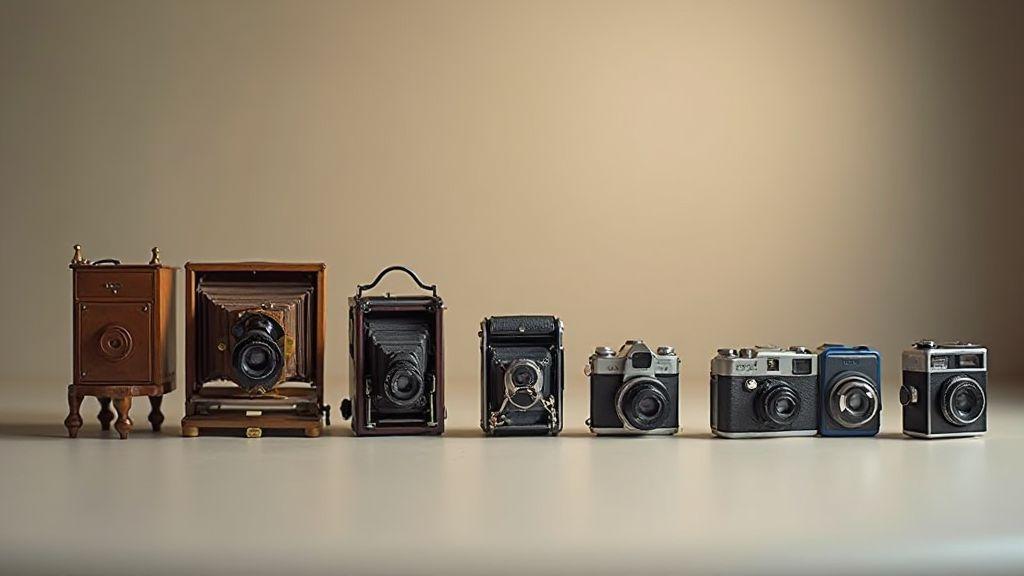
Evolution of Cameras from Daguerreotype to Modern FilmAnúncio
This article traces the Evolution of Cameras from Daguerreotype to Modern Film, showing how each breakthrough reshaped memory, sharing, and everyday life.
Key milestones in the Evolution of Cameras from Daguerreotype to Modern Film
- Daguerreotype era (1839): sharp, single-image portraits on polished metal plates.
- Calotype (Talbot, 1841): paper negatives enabling multiple prints from one image.
- Wet plate collodion (1850s): highly detailed images on glass with a studio workflow.
- Dry plate photography (late 1870s): pre-coated plates for faster, cleaner shooting.
- Roll film and Kodak (late 1880s): portable, user-friendly, democratizing photography.
- 35mm format and SLR evolution: lighter kits, better framing, and more personal storytelling.
- Color negative film and home printing: color seen and printed at home with control and immediacy.
Daguerreotype and early portraits
You’re stepping into a moment when portraiture shifts from painted likenesses to something sharper and new. The daguerreotype, emerging in the 1830s, lets you capture a real moment with remarkable detail. It’s not just about faces; it’s about how you see yourself and loved ones in a form you can keep. The process feels almost magical: a mirror-like image forms on a polished metal plate, then fixes so you can share it. The room hums with the excitement of watching a photo appear from a shiny sheet.
In those early days, studios sprouted because people wanted to try this new magic. The daguerreotype offered precision you hadn’t seen before in a photograph. It wasn’t cheap, and sessions could take time, but the payoff was a crisp image with fine lines and subtle shadows. For you, it meant capturing a sitter’s exact expression—a memory beyond a painted impression. The social ripple was large: families gathered, strangers became subjects, and sitting for a photo entered daily life. Portraits became keepsakes, not curiosities.
As you reflect, the daguerreotype wasn’t just a tool; it reshaped how memory is valued. The single-image nature meant a one-of-a-kind likeness in your hands, without later negatives. Care and reverence mattered—plates were delicate and priceless. The rise of studios nudged you to consider your own portrait: how you present yourself, how you sit, how light falls. Every photo you keep is a tiny piece of time you chose to preserve.
Louis Daguerre and the 1839 process
Louis Daguerre helped make the process practical and famous, partnering with Nicéphore Niépce to refine a method that captured scenes with remarkable detail. The 1839 process turned a moment into a nearly mirror-like plate, revealing textures you could feel—the weave of a sleeve, the glint of a watch, the curve of a cheek. Plates were prepared, exposed, developed, and fixed so the image stayed put.
The steps were precise: polish the plate, sensitize with mercury vapors, expose in the camera, develop the image, and fix it. It wasn’t rushed; patience was part of the charm. The result—still and crisp—made you rethink portraits as both science and personal treasure. That blend of art and technology is what gave the daguerreotype its lasting allure.
How you saw portrait studios appear
Studios grew where people gathered, storefronts turning into bright spots of history. The studio offered a controlled space: light, backdrop, quiet, and a patient photographer guiding poses. You could feel the difference between a casual snapshot and a carefully staged portrait, where hours could be spent. The studio became a sanctuary to present yourself—serious, soft, or playful.
Photographers learned to master mood and light, revealing textures and personalities. You might try multiple poses to capture a desired look. The studio culture evolved into a social ritual: families lined up, friends swapped stories between shots, and a keepsake emerged to treasure long after the moment passed. Studios mattered because they turned fleeting moments into something you could hold.
Single-image metal plate care
Treat that plate with care. Keep it clean and dust-free; avoid fingerprints on the viewing surface. Store it in a dry, safe place to prevent humidity from warping the image. If handling, wear clean gloves and hold by the edges. Display away from direct sun and extremes of temperature. A daguerreotype is a family memory—protect it.
Calotype process and paper negatives
Calotype opens a window into a world where photos began as delicate paper negatives, letting you create multiple images from one negative. The process feels intimate, almost craft-like, a step you could imagine doing at home with patience. It’s the early spark that allowed communities to share memories quickly, long before digital copies. The paper negatives give a soft, painterly look with warmth, a charm you don’t get from metal plates. Materials shape perception—the grain of the paper, the way light dances, and how a single negative could bloom into several prints.
This approach invites collaboration. In towns sharing tips, neighbors compared results and swapped techniques. The Calotype’s reliance on paper meant errors could be corrected by trying again, lane by lane. It’s a reminder that photos aren’t just moments; they’re processes refined with friends. The balance between sensitivity, development time, and final softness gives Calotypes their signature look and teaches communities to value patience and practice.
The ability to reuse a negative was practical: you could print several copies for a family album or event program without reexposing the scene. Paper negatives record light and shadow in a way that connects copies to the first moment captured. Handling these prints brings history into your hands—the tones drift, the edges soften. It’s more than pictures; it’s sharing a memory that unites a town through common imagery.
William Henry Fox Talbot’s method
Talbot built a step-by-step path you can still imagine today. He coated paper with a light-sensitive salt bath, exposed it under the camera, then developed and fixed the image. The key idea: translate a scene into a negative on paper so you can pull multiple positives from one sheet. Exposure, washing, and drying require patience, but the result is a printable negative with lasting charm. Talbot’s method wasn’t a trick; it was a framework encouraging experimentation—from paper quality to chemical strength. In his workshop you’d hear the clink of glass and careful measuring, all guided by a steady hand.
The appeal lies in everyday materials: paper, a simple chemical mix, and a basic camera setup. You’re not chasing perfect clarity; you’re capturing light in a real, warm way. The talent lies in how the image forms on paper and how you can press for more copies. His idea of reusing a master negative paved the way for sharing photos today—just with faster, easier access.
How your town made repeat prints
In your town, the repeat print came from the trusty paper negative. You’d pull a positive from the same sheet again and again, building a small archive everyone could view or borrow. The process encouraged exchanges: neighbors shared negatives for family portraits, street scenes, or events for the local paper. Reproduction meant you could tell multiple stories from one moment, knitting the community closer. These copies became a communal currency—tokens of shared memory.
People refined the process together. If a print came out pale, they’d adjust exposure or development time; if too dark, they’d tweak the bath or rinsing. These tweaks weren’t just technical; they shaped how towns saw themselves. Repetition also meant documenting more of daily life—festivals, markets, daily routines—without waiting for a pro. Repeat prints formed a mosaic of local character, a steady thread through changing seasons.
Wet plate collodion and sharp images
Wet plate collodion lets you capture incredibly sharp details, and you’ll feel the difference in landscapes or portraits. You’re in a community that values hands-on craft, where the photo is as much about patience and skill as result. The secret is in the setup: clean glass, a fast developer, a steady hand. When you nail the focus, the world comes into clear, tangible form—like peering through a self-made window. Sharpness shows in texture—skin, fabric, even distant mountains in shadow.
Your setup stays calm and predictable. Mix the collodion, dip the plate, coat evenly so nothing looks smeared. Consistency yields consistent images. In a community setting you’ll trade tips on lighting and exposure, learning tweaks that sharpen results without adding stress. The goal is clean, faithful representation with the warm, tactile feel of the process.
Patience pays off: careful timing, precise development, and a bit of luck with the weather. Each plate with sharp lines is a small victory you can share at gatherings, proving traditional methods still hold value in a modern world.
Faster exposures for outdoor use
Plan light and timing to speed outdoor exposures. Choose bright days or position subjects so light falls evenly, reducing motion blur. A wider aperture helps, balanced with plate chemistry to keep sharpness. You’ll notice faster results, with less time between exposure and development.
On streets or parks, read the light like a friend. Pick spots with soft backgrounds and clean sightlines to help plates settle into focus quickly. Communities will notice your growing speed, giving you confidence to shoot in crowds.
Travel photographers in communities
Travel photographers turn every ride, market, and festival into a studio. With glass plates and a portable darkroom, you exchange tips with neighbors who love the craft. Images reflect local life—faces, fabrics, and street textures that tell more than any caption. Moving from town to town you build a portfolio that blends technique with place, leaving a piece of you in each sharp plate you produce.
Glass plate handling
Handle glass with care: keep it clean and dust-free. Wear gloves and store plates in racks to prevent chipping. A steady hand and routine matter—cleaning with a lint-free cloth and a dust-free workspace help keep images crisp.
Dry plate photography and mass use
Dry plate photography opened photography to more people. Pre-coated plates meant shooting faster and with less mess, so you didn’t need to mix chemicals every night. This democratized the hobby, letting everyday people capture moments.
As you explore, you’ll feel photography isn’t just for experts anymore. Plates were durable and easy to store, encouraging outdoor shooting and weekend trips with friends. A sense of community grew as households kept kits ready for spontaneous moments.
Pre-coated plates for convenience
Pre-coated plates changed the workflow. You save time by avoiding on-site chemical mixing, so you can focus on framing and light. The convenience invites more experimentation in a day and lowers the entry barrier for beginners. You don’t need to be a chemist to get good results.
Your home setup becomes a mini-studio—a darkroom corner or shaded balcony—making frequent shooting feasible and speeding up learning.
Rise of amateur photographers at home
More people turn hobby into habit. With dry plates and easy setups, neighbors share shots and swap prints in gatherings. Conversations shift from gear to lighting and home setups. Your camera becomes a daily companion, not a rare tool, and your storytelling evolves—observing daily life with a sharper eye and capturing meaningful moments. The home becomes a launchpad for creativity, and the camera a doorway to community.
Easier home photography
Inside, use natural light and simple setups. A chair by a window, a plain background, and let light do the work. With fewer technical hurdles, you focus on composition and moment, noticing patterns you’d otherwise miss. The changes invite you to shoot more often, at your own pace. Your home becomes a studio, your family your audience, and your camera a tool for connection.
Gelatin silver process and print quality
The gelatin silver process underpins historic black-and-white prints. The emulsion with gelatin holds silver halide crystals, delivering a rich tonal range. Clean whites, smooth midtones, and fine grain keep textures sharp in prints. Proper fixing, washing, and careful handling preserve contrast and depth. When you compare gelatin silver prints to other methods, you see why many families still choose this for heirlooms. Toner options, like selenium, can deepen blacks for a timeless look.
If you’re starting out, practice with a test strip, then move to a small print. Gentle handling, steady temperatures, and timing keep the texture you want. The ritual of making a print that carries your family’s memory becomes a quiet, rewarding craft.
Stable black-and-white prints for papers
Choose papers designed for the gelatin silver process for better adhesion and stable tone separation. Store prints in a cool, dark place, away from humidity and dust. Proper washing after development keeps images clean and bright. Archival sleeves and UV-filtered framing help protect images, letting your prints stay legible and striking for gatherings.
How your family album improved
Stable prints add depth and a tactile feel, grounding images in a way you can sense. The blacks feel solid, whites breathe, and even static poses feel alive. As pages grow, each print supports your story so future generations feel connected to the moment. Aging photos print with warmth, making the album feel like a living artifact rather than a static display.
Long-lasting photo albums
Long-lasting albums hinge on prints that resist fading and durable paper. Use acid-free pages and interleaving sheets to prevent chemical reactions. A sturdy spine and secure mounting keep photos from curling. With careful design, you create an album you’ll hand down with confidence, memories enduring through years of turning pages.
Roll film introduction and snapshot culture
Roll film shifted photography from rare art to everyday habit. You feel a community of tips, roll swaps, and small victories like a perfect family photo or a goofy candid. Photos aren’t just for special occasions; they fit into daily rhythm, a simple ritual that keeps stories alive.
As you read, picture the thrill of a fresh roll drying on a line and the shared anticipation in neighborhoods. Colorful photos become a language for families, sparking a sense of belonging as a growing culture places everyday moments on par with milestones.
George Eastman and Kodak cameras
George Eastman reshaped daily life by making photography easier for everyone. Kodak’s reliable gear put cameras in homes, letting people shoot at will and send rolls off to be developed. The culture shifted toward sharing—captured moments become part of daily conversation, not just formal portraits.
Kodak’s approach nudged a broader habit: capture now, print later. Memories felt immediate and communal, and a shared memory bank grew within communities.
Portability that changed family life
Cameras got smaller and lighter, letting you bring them on adventures you’d skip otherwise. You could capture milestones on picnics, road trips, school plays, and weekend strolls without choosing between living the moment and recording it.
A camera in every home changed routines. Simple rituals—the bedtime shot, a dinner silly face, or the first bite of a recipe—became common. Presence, not perfection, became the goal, giving memories real weight.
Camera in every home
The gentle revolution of home photography turned living spaces into living albums. Shelves filled with framed memories and growing albums marked the passing years. The home became a living photo album your family will revisit, long after you’re gone.
35mm format and SLR evolution
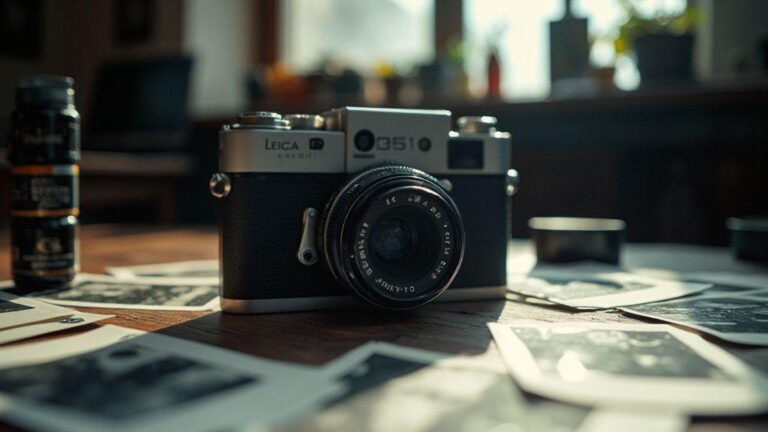
You’ll see how a tiny film size changed everything. The 35mm format made cameras lighter, cheaper, and easier to share. It wasn’t just pocket-size; it created a shared language you carried anywhere. With 35mm, you got more pictures per roll, so you stayed in the moment instead of worrying about wasting film. This pushed photographers to experiment, trusting what you see through the viewfinder and growing your sense of composition. The result is a community where everyday life becomes the subject, not just a studio setup. This is the heartbeat of the Evolution of Cameras from Daguerreotype to Modern Film, felt every time you bump into a friend with a camera at a park or block party.
When you compare early formats to 35mm, the practical difference is clear. The film was small, but the impact was big. You could shoot in quick moments, capture candid smiles, and tell your story without lab delays. Sharing reels and albums spread through neighborhoods, clubs, and schools. The 35mm standard brought affordable lenses and accessories, turning your kit into a daily companion. It’s why you started thinking of life as a sequence of scenes waiting to be captured.
If you’re building your photo history, you’ll appreciate how 35mm opened doors. It invited a wider community of shooters who swapped tips, shared results, and celebrated what you found behind the lens. The format isn’t just about prints; it’s about conversations, mischief, and spontaneous adventures that become pages in a shared album. You’re not alone—neighbors and coworkers join in this evolving story, thanks to simple, reliable 35mm film.
35mm moved from motion pictures to stills
35mm didn’t stay in movie houses forever. It came home, turning bold cinematic moments into everyday stills. Framing, timing, and light began where you live, not on a set. The same film that carried chase scenes now carries laughter in the backyard. The cinema-to-home bridge makes photography feel approachable, a shared hobby rather than a studio job. A 35mm camera is a piece of history ready to become a memory.
Back then you could use cinema stock for stills without a crew. You learned to anticipate moments, press the trigger, and trust your eye. Reading light changed too—the film’s sensitivity wasn’t as forgiving as today’s sensors. Small details—sunlight on hair, a streetlamp’s glow on wet pavement—became the beauty of the shift: you’re a storyteller with a camera in hand.
The transition meant your camera could go anywhere—beaches, parades, birthday parties. You started collecting moments that felt true to you and your crew. The 35mm format captured life as it happens, and that’s what people remember most: energy and authenticity, not rehearsed poses.
SLR evolution gave you better framing
With SLRs, you could see through the lens what you’d capture before the shutter. Framing became intentional; memories become more than events—they’re how you chose to show them. The single-lens reflex system offered a direct view, guiding your composition.
Over time, faster lenses, sleeker bodies, and brighter viewfinders followed. You could focus quickly, track moving subjects, and keep your eyes on the action. The evolution of SLRs brought practical improvements—different bodies for different feels, lighter kits for travel, and reliable metering for tricky lighting. You gained confidence in your eye, and your photos showed it.
An SLR wasn’t just a tool; it was a doorway to storytelling. You balanced exposure, perspective, and timing to craft images that felt true to the moment and true to you. Your albums carried a tone of honesty and personality, inviting friends and family to respond to clarity rather than craftiness alone. You freeze a moment so it can live longer in memory.
Professional look at home
A polished, professional look at home comes from the right setup. Use a dependable 35mm body with a sharp prime lens to achieve depth, contrast, and clean lines. Your kitchen table can be a studio as you direct the scene and control the light. Small decisions—subject placement, light angle, and background—shift the mood. That’s the magic of bringing a professional look to everyday life.
Practice keeps you sharp. Keep a few go-to settings and lenses within reach. When a moment arrives, you react with speed and confidence. Your photos feel intentional, even when you shoot fast, turning ordinary days into something timeless.
Color negative film and home printing
Color negative film makes memories glow again from your desk. You print at home or via a local lab and decide how bold or soft colors should be. The process is familiar, like baking a cake to your taste. Your goal is true-to-life tones, not oversaturation.
Color negatives let you adjust look without risking the original, tweaking balance, saturation, and contrast to suit the mood. Home printing makes your color prints a part of daily life—fridge, albums, and walls—and keeps a personal touch that digital copies miss.
Consumer color film made prints easy
Consumer color film was a game changer: you don’t need fancy gear for solid, accurate colors. Fresh film and good processing chemicals, plus test strips, help you dial exposure without waste. Once you find a balance, future shots turn out reliably, making photography a regular habit rather than a chore.
Kodacolor and everyday color photos
Kodacolor became a staple for everyday color moments. Warmth in gatherings, greens in parks, and forgiving exposure let you focus on the moment. Home prints show natural skin tones and balanced color, telling your story with simplicity and honesty. As you shoot more, you’ll discover your own preferences—color brightness or muted tones—that become your signature.
Your photos in full color
Full-color prints look best when color is treated with care. Balance brightness and contrast to preserve detail in shadows and highlights. If a tint creeps in, adjust white balance before printing. Home printing lets you control vibrancy or subtlety to suit your room. Your full-color prints become part of daily life—on the fridge, in albums, and on walls—sharing warmth and clarity that digital still can’t match. The Evolution of Cameras from Daguerreotype to Modern Film manifests in your own color prints: personal history, colored by you.
Motion picture film advancements and community life
Moving pictures shape your neighborhood when you see old and new cameras side by side at screenings. Community venues glow as they show evolving techniques, from grainy frames to sharp scenes. You notice tiny details you’d missed before, and shared attention builds belonging. Each screening reminds you that film is a way you and neighbors connect over memory, light, and time. The screen becomes a mirror of your town’s life, reflecting technological progress and personal growth. Seeing the latest gear in action might remind you of your own memories—your first cinema, a jump scare, or a color shift changing a scene’s mood. That’s the power of motion picture film advancements: they invite community dialogue about how you live and watch together.
Evolution of Cameras from Daguerreotype to Modern Film in local screenings
Local screenings highlight the journey from daguerreotype-era devices to modern cameras, offering a tangible sense of progress. Compare the simplicity of early machines with modern precision, and you’ll feel the thread linking light, time, and storytelling. The evolution isn’t just about pictures; it’s about how generations in your community understand images as memory and meaning. When a curator speaks of frame rates or exposure, your eye tunes to the rhythm of images just as it did long ago. This evolution binds generations in shared viewing and conversation.
Silent to sound to color broadened audiences
Audiences grow as films acquire sound and color. Silent films invite imagination; the accompanying music and moments become part of the experience. Sound introduces dialogue and quickens laughter and gasp, while color adds warmth and mood beyond black-and-white. Families with kids stay engaged longer; seniors enjoy new textures and palettes. The shift isn’t just technical; it broadens who participates, who talks about films, and how communities recall memories tied to palettes, lighting, and sound. Local screenings become places where memories are shared and revisited in conversation tomorrow.
Community storytelling on screen
Your local screens become a space for neighbors to tell their own stories. Filmmakers from your town shoot small scenes and screen them to gauge how real life lands on film. The energy comes from homegrown voices—from a grandmother teaching a trick to a teen experimenting with lighting in a garage-studio. It’s a tapestry of stories, not just big-budget fantasies, and you see yourself in the mix—the shy friend, the loud neighbor, the proud parent. These homegrown stories boost neighborhood pride and invite participation—whether filming a documentary, suggesting topics, or hosting post-screening discussions. The community gains a shared vocabulary about images, memory, and place, and you become part of that living film.

Junior Souza is a passionate analog photographer and the mind behind estoucurioso.com. With a camera always in hand and a roll of film never far away, Junior has spent years exploring the world through a 35mm lens — learning, experimenting, and falling deeper in love with the slow, intentional process that only analog photography can offer.
What started as pure curiosity quickly became a lifestyle. From testing different film stocks under harsh light to hunting vintage lenses at flea markets, Junior believes that understanding your tools is just as important as developing your eye.
Through estoucurioso.com, he shares everything he has learned along the way — the techniques, the mistakes, the references, and the stories behind the frames. His goal is simple: to build a space where beginners and enthusiasts alike can grow, get inspired, and never stop being curious.
Always learning. Always shooting.