Film speed basics for youAnúncio
Film speed is how sensitive your film or camera sensor is to light. Knowing this helps you shoot in bright sun or a dim room without guessing. Faster speeds are more sensitive, letting you avoid dark shots but may add grain. Slower speeds yield cleaner, crisper images in bright light. Think of film speed as a light-hand that guides exposure.
Choosing a film or setting ISO is about how quickly light marks the film. Faster speeds push more light into the scene with less actual light; slower speeds need more light or longer exposure. With practice, you’ll predict your results: bright days suit slow speeds; indoor scenes benefit from faster speeds. The goal is to match film speed to the light so highlights and shadows stay in balance.
Your meter helps estimate exposure based on the speed you choose. A fast speed may call for a shorter exposure; a slow speed, a longer one. Accept the meter’s guidance and adjust for your desired look. With a little habit, you’ll feel confident changing speeds to suit the scene.
What is film speed
Film speed is the rating that tells how sensitive your film is to light. Higher numbers mean more sensitivity, allowing shooting in lower light. Lower numbers mean less sensitivity, safer in bright light but requiring more light. This rating helps you decide how long to expose and how much light to let in. When you know the speed, you won’t guess—you’ll adjust exposure to get the look you want.
In practice, film speed guides your choices. In a dim room you’ll pick a higher speed to avoid a dark image; in bright sun you’ll choose a lower speed to prevent blown highlights. The trick is to stay consistent with your goal: clear, balanced images that fit the scene.
Film sensitivity basics
Film sensitivity basics describe how reactive your film is to light. A higher sensitivity (faster film) grabs more light; a lower sensitivity (slower film) needs more light. Faster films give flexibility in low light but show more grain. Slower films stay smooth with fine detail in bright light.
Your choice shapes the look you want. For a clean, crisp image in sun, use a slow speed. Indoors or for fast moments, a fast speed helps control exposure or freeze motion. Sensitivity also subtly affects color and contrast, so different stocks will feel a bit different.
ISO for beginners and you
Starting with ISO helps you control exposure without guessing. ISO is the sensitivity dial for film or a camera. A higher ISO brightens images in low light but adds grain; a lower ISO keeps detail but needs more light. Modern cameras let you tweak ISO on the fly; film stocks have their own personality. Begin with a starting point for the scene and adjust as needed. Indoors often favors higher ISO; sunny days reward lower ISO. Your camera becomes a quick partner, not a puzzle.
The core idea is balancing ISO with shutter speed and aperture to match your mood. For crisp portraits with smooth tones, use a low ISO in good light. For fast action in dim light, raise ISO to avoid blur. Over time you’ll hear the rhythm: pick ISO, adjust shutter, and let the scene breathe.
Analog film ISO guide
ISO isn’t just a number; it’s a behavior promise. Choose a film with its designed ISO and shoot accordingly. An ISO 100 film needs more light but stays clean with minimal grain. ISO 400 drinks more light and shows more grain, which some love for texture. Match the film’s speed to expected lighting and consider slight overexposure to recover highlights.
Note that a film’s base ISO isn’t the whole story. Processing and developers influence final contrast and grain. A stock’s personality guides pairing fast films with busy scenes and slow films with bright days. Test rolls in typical conditions help you compare how different ISOs feel, building a library of go-to stocks for different moods.
Balancing ISO with exposure is the real trick. In mixed light, meter for a mid-tone exposure and accept some grain if using higher ISO. You’ll gain control by noting how the film reacts to light and how grain looks in development. The pattern—lower ISO in sun, higher ISO in shade—will become familiar, shaping your prints or scans to reflect your style.
ISO for beginners
Start with a base ISO that matches typical lighting. Outdoors in daylight, ISO 100–200 is solid; indoors without flash, ISO 400–800 helps maintain exposure. The aim is predictable exposure, so you don’t guess later. With practice, you’ll learn to adjust noise and grain to taste, not to fix mistakes.
Think of ISO as a brightness switch. Raise it for brighter frames with more grain; lower it for cleaner detail but with more light or aperture required. Faster films aren’t bad—just different looks. Pick the look you want and respect the film’s behavior. You’ll be more in control once you know your starting point and how to adapt on location.
Everyday rule of thumb: meter the scene, pick ISO, shoot a frame or two, and review. If the frame looks too dark, raise ISO or open the aperture slightly. If it’s too bright, lower ISO or close the aperture. You’ll start planning exposure and hear your camera speak in a language you understand.
ISO guide for beginners
Start with a plan: what light level and mood do you want? In bright sun, ISO 100–200; in shaded or indoor scenes, ISO 400–800. For very dim rooms, ISO 1600 or higher is possible but grainy. Test different stocks to learn what feels right.
Keep a small log of scenes, ISO choices, and results. Note grain, contrast, and how exposure sits. Your notes will speed up decisions on future shoots and let you focus on framing and moment.
Beginner Introduction to Film Speeds and ISO Ratings in Analog
Your path from confusion to clarity starts here. You’ll gain confidence by testing, noting, and applying what you learn. With each roll, you’ll understand how ISO shapes mood, grain, and detail, building intuition for tricky light while keeping your own voice in every frame.
ASA vs ISO difference made clear
When you shoot film, you’ll see two numbers guiding exposure: ASA and ISO. They’re related but not identical. ASA is the old label; ISO is the modern term. Your goal is to know which number to trust for the light you have and stay consistent so negatives stay predictable. Speed also affects grain and contrast and how much you can push a shot in development. Lower speeds yield finer grain and smoother tones; higher speeds capture more light but with more grain. The key is choosing the right speed for the scene and sticking with it for consistent results.
History of ASA and ISO
Film speed started with ASA in 1925 to compare light needs. As cameras evolved, ISO replaced ASA in the 1970s, becoming the global standard. Rolls labeled ASA 400 behave similarly to ISO 400 in practice; the main difference is labeling and meter readings. Reading both labels helps you predict exposure. The shift didn’t change the core idea: you need enough light to capture detail without losing it. This history helps you translate old stocks to modern meters and predict responses in your environment.
Reading ASA vs ISO on film
ASA on a box gives a light-sensitivity snapshot from the past. ISO is the modern language. ISO numbers reflect the same speed concept, and meters tell you where you stand. Map higher numbers to more sensitivity for dim scenes and lower numbers to less sensitivity for bright scenes. For a street portrait, ISO 400 often balances mood and clarity; a sunlit landscape may be happy at ISO 100. Treat the number as a guide and adjust as the scene changes.
You can translate old ASA to ISO and predict behavior in your camera, making you more flexible. With practice, you’ll instinctively know which speed to rely on for each shot, and your images will feel deliberate. Beginner Introduction to Film Speeds and ISO Ratings in Analog becomes second nature.
ASA vs ISO difference
ASA and ISO measure film or sensor sensitivity, but labeling differs. The math is the same when read correctly. Your meter reads the speed you’ve chosen and helps set exposure. The key is consistency: switch labels mid-shoot and exposure will drift. Choose a speed, stay with it, and adjust lighting or distance instead of hopping labels. The speed number guides brightness, not a hard rule.
Choose low or high ISO film
Choosing film changes how pictures look in light. Low ISO films need more light but render cleaner detail; high ISO films work with less light and show more grain. For sunny portraits, low ISO is ideal. Indoors or at dusk, high ISO helps capture moments without extra light. Start with the scene: bright days favor low ISO; dim rooms favor high ISO. You can push or pull film later, but starting with the right ISO saves time and yields better results.
Low ISO gives cleaner colors and less grain; high ISO accepts more light and shows more grain, creating a vintage vibe. For beginners, think of ISO as a light bucket: full equals more light and cleaner tone; half-full equals more grain and contrast. Match the ISO to your typical conditions and keep a stock for each mood.
Low vs high ISO film
Low ISO shines in bright light with smooth tones; high ISO helps in tricky lighting and at the expense of grain. Try both on the same subject under different light to see how grain, contrast, and color shift. Take notes to learn which speed serves your preferred look.
Choosing film speed
Your film speed choice guides exposure, color, and grain. For bright days, a lower ISO preserves detail and sharpness. For dim scenes or a gritty mood, a higher ISO helps. A balanced exposure keeps highlights and shadows readable.
A practical approach: start with a middle-range speed and adjust as you learn your scenes. You’ll notice when a moment benefits from extra brightness or texture. Eventually, your instinct will guide you without overthinking.
Exposure triangle in film photography
In film photography, light, time, and sensitivity shape every shot. The exposure triangle—aperture, shutter speed, and ISO—helps you predict results and conserve film.
- Aperture controls brightness and depth of field: wide opens brighten and blur the background; narrow openings keep more of the scene in focus.
- Shutter speed controls motion and brightness: fast speeds freeze motion; slow speeds allow movement and need more light or stabilization.
- ISO sets sensitivity: higher ISO is brighter but grainier; lower ISO is cleaner but needs more light.
With practice, you’ll learn to balance brightness, sharpness, and grain to fit the scene.
Aperture and film speed
Set aperture first to control depth of field. A wide aperture brightens and blurs the background; a narrow one keeps the scene more in focus. If you go wide, you may need a faster shutter or a lower ISO to avoid overexposure.
Film speed (ISO) tells you how sensitive the film is to light. Faster ISO reacts quickly in low light but brings more grain; slower ISO requires more light but yields cleaner tones. Pairing a fast ISO with a wide aperture may demand a faster shutter to balance exposure.
Shutter speed and ISO
Shutter speed determines how long light hits the film. A fast speed freezes motion; a slow speed can blur motion for a sense of movement. The trade-off with ISO is light sensitivity and grain. In dim scenes, raise ISO and use a moderate shutter; in bright scenes, lower ISO and use a faster shutter to preserve detail.
Exposure triangle film photography
The goal is a clean, well-exposed image where all three corners work together. If one shifts, adjust the others to maintain balance. For beginners, fix a target shutter speed you’re comfortable with, then set aperture and ISO to fit the light. As you gain experience, you’ll predict grain and depth at different ISOs.
Beginner Introduction to Film Speeds and ISO Ratings in Analog is a solid starting point for your journey. You’ll learn how film speed affects grain, tonal range, and light handling, and how to read the numbers on the box to guide on-location choices.
How ISO affects grain and detail
- Higher ISO makes the film more sensitive to light, often adding grain across midtones and shadows.
- Lower ISO keeps details crisper with finer grain, but needs more light.
Balance ISO with lighting and the look you want. At dusk, higher ISO can save you from losing exposure, trading some grain for speed. In bright light, low ISO delivers cleaner detail. Your choice shapes color, contrast, and texture.
How ISO affects grain
- Higher ISO increases visible grain, creating a gritty, dramatic look.
- Lower ISO reduces grain, yielding smoother textures and finer detail.
Grain size and film texture
Grain size follows film speed and emulsion. Faster films show larger grains earlier; slower films render finer grain. Grain adds character and can help tell the story.
Grain and image detail
Grain can mask or reveal detail. Heavier grain may reduce fine edge sharpness, while finer grain preserves it but requires more light. The trade-off is part of the film’s character.
How ISO affects grain and detail (conclusion)
- Beginner tip: start mid-range ISO in good light, then adjust for mood and light.
- Quick takeaway: Higher ISO = more grain, faster results; lower ISO = cleaner detail, more light needed. Keep testing to find what suits your stock and style.
Metering and setting ISO on your camera
Light meters measure brightness to guide exposure; ISO tells the camera how sensitive to light the film is. Treat metering as a flashlight for exposure and ISO as the volume knob for final brightness. Practice on simple scenes to learn the balance: bright sky, shaded face, mid-tone wall.
Your goal is to match the scene to a film brand’s speed. If it’s bright, the meter pushes you toward a higher shutter speed or lower ISO; if dim, you’ll need more light or a higher ISO. Film’s grain and color respond differently than digital, so trust the meter but expect push or pull with your stock. Meter a mid-tone subject, then adjust for mood.
Using a light meter with film
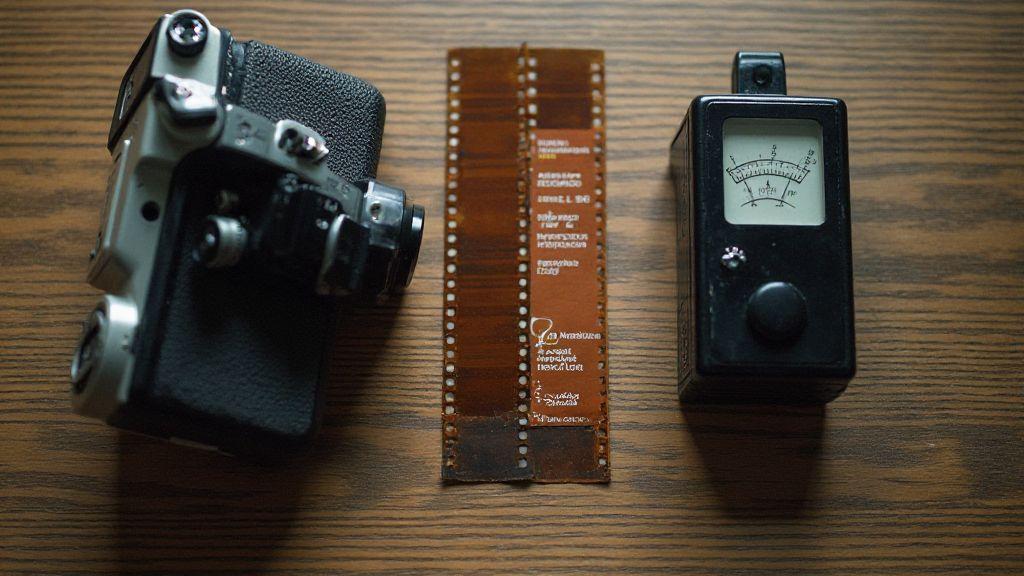
A light meter helps you expose correctly by measuring scene brightness. With a handheld meter, set ISO to your film stock and read the recommended shutter/aperture. On a camera, balance shutter, aperture, and ISO to hit the meter’s target. Meter skin tones first, then adjust for background brightness to keep exposure natural.
Do a couple of test shots with the same film stock under different lighting. Note how meter readings shift and how grain appears. Backlit scenes may need slight overexposure to keep faces from going too dark. In bright sun, you might underexpose slightly to protect highlights. Practice with a simple subject; bracket a few frames when trying a new stock.
Setting film ISO on manual cameras
Manual cameras require loading the film and setting the camera to the film’s speed. If you set ISO 400 for stock rated at 400, the meter should guide you toward a balanced exposure. Mistakes can drift exposure, so lock in the film’s speed before metering and stay consistent.
Some stocks are forgiving in shadows; others hold detail in highlights but grain more in low light. When unsure, shoot a quick test roll to see how much you can push or pull within the stock’s limits. Confidence grows with predictable outcomes.
Analog metering and ISO
Analog metering and ISO form a tight loop: meter reads the scene, ISO defines film sensitivity, and exposure settings follow. Treat ISO as the rule for final brightness. With practice, you’ll know when to let the meter guide you or push exposure for mood.
Shooting tips for beginners with film
- Start with light, patient shooting. Treat each frame as a small project and keep notes.
- Bracket exposure on familiar scenes to learn how your film handles highlights and shadows.
- Plan a few subjects you know well and compare results across films and developers.
- Maintain a simple log: film type, ISO, exposure, and how it felt pressing the shutter.
Your hands-on practice will teach you more than any tutorial. Grain adds character and can make images feel timeless.
Choosing film for light conditions
Light guides film choice. In bright sun, look for higher contrast and finer grain; in overcast conditions, seek midtones with texture. A versatile starting stock around ISO 400 handles many conditions. Indoors with limited light may benefit from slower films (ISO 100) or a forgiving stock (ISO 200–400). Color film versus black-and-white changes the approach: color captures warmth, while black-and-white emphasizes contrast and texture.
Bracketing and test shots
Bracketing is your safety net: shoot a scene at normal exposure, then one stop brighter, and one stop darker. This helps you learn how your stock handles different exposures and where highlights stay natural. For mixed light, bracket to map how your camera, film, and ISO work in real life. Use bracketed sets as tiny experiments; write down what each teaches you for future shoots.
Practical ISO tips for beginners
- Start with ISO 100–200 for bright days and ISO 400 for indoor light.
- Anticipate lighting: shaded scenes benefit from ISO 400; sunny scenes from ISO 100.
- Higher ISO means more grain; lower ISO means cleaner detail. Use them to fit mood.
- Keep notes on ISO choices and results to learn your film’s personality and your camera’s quirks.
Storing films and materials to protect ISO
Storing film properly protects ISO and keeps images predictable. Keep light exposure low, dust out, and maintain stable environments. Use airtight containers with tight seals to block moisture and light. Bring materials to room temperature before opening if stored in a fridge or freezer to prevent condensation.
Film storage temperature and humidity
Store film cool and stable, around 13–15°C (55–59°F) with minimal temperature swings. For hot rooms, use a cooler spot or fridge. Humidity should be kept around 30–50%. Use a hygrometer and desiccants as needed. Label and seal boxes to prevent accidental exposure. If storing cold, let film reach room temperature before handling.
Shelf life and expiry effects
All films have shelf life. Rotate stock so newer film is used first. Refrigeration can extend life for black-and-white stock; color stocks fade faster. If unsure, test a few frames from an old batch to gauge shifts or fogging. Signs of poor storage include white fogging or color shifts. Replace stock if needed and adjust your process.
Caring for film and materials
Handle film by the edges and use clean spaces; cotton gloves help with fragile stock. Keep moisture and dust away; avoid bending or heating reels. Load film in dim light to prevent accidental exposure. Store materials in airtight containers with desiccants and check seals regularly. Replace or refresh environment as needed.
If you’d like, I can tailor this further to target a specific length or adjust the emphasis on beginner-friendly workflows.

Junior Souza is a passionate analog photographer and the mind behind estoucurioso.com. With a camera always in hand and a roll of film never far away, Junior has spent years exploring the world through a 35mm lens — learning, experimenting, and falling deeper in love with the slow, intentional process that only analog photography can offer.
What started as pure curiosity quickly became a lifestyle. From testing different film stocks under harsh light to hunting vintage lenses at flea markets, Junior believes that understanding your tools is just as important as developing your eye.
Through estoucurioso.com, he shares everything he has learned along the way — the techniques, the mistakes, the references, and the stories behind the frames. His goal is simple: to build a space where beginners and enthusiasts alike can grow, get inspired, and never stop being curious.
Always learning. Always shooting.